
Wedbush Initiates Oracle Outperform Rating – "$553B Backlog Makes It AI Infrastructure Key Player"
Wedbush Securities initiated coverage on Oracle with an Outperform rating and $225 price target. The firm highlighted Oracle's $553 billion backlog (+325% YoY) and 84% cloud infrastructure growth as evidence of an undervalued AI infrastructure play.
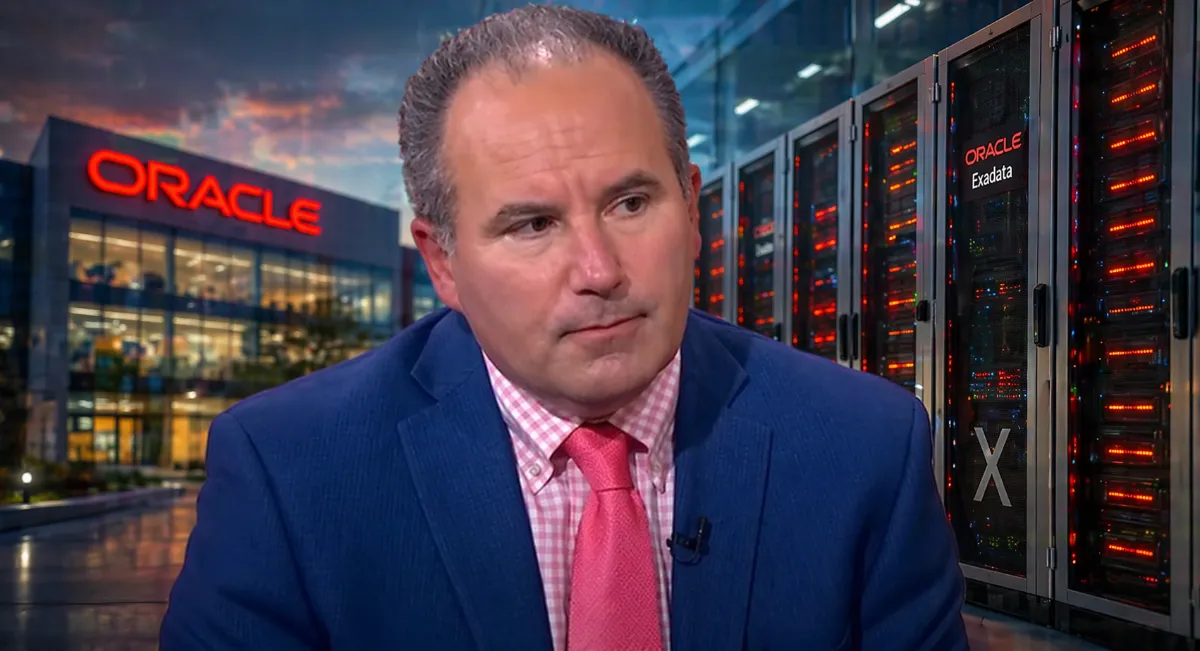
- Wedbush initiated Oracle at Outperform with a $225 target, citing $553B backlog (+325% YoY) and 84% cloud growth
- The stock trades at half its 52-week high, with analyst consensus implying ~50% upside
$225 price target with $553 billion backlog surging 325% YoY… Cloud infrastructure grows 84%
Wedbush Securities initiated coverage on Oracle (ORCL) with an Outperform (Buy) rating and $225 price target on January 24th (local time). The analyst team led by Dan Ives argued that Oracle is being repositioned as a core AI infrastructure provider but remains undervalued by the market.
Wedbush diagnosed that Oracle is successfully moving beyond its traditional image as a database company to build next-generation cloud infrastructure for large-scale AI workloads. Partnerships with OpenAI and NVIDIA, plus participation in the Stargate project, form the core pillars of this transformation. The firm also noted that Oracle Cloud Infrastructure (OCI) is optimally structured for large AI model training and inference thanks to its high-performance, low-latency architecture.
$553 Billion Backlog… 325% YoY Surge
The most striking figure in this report is the remaining performance obligations (RPO) backlog. Oracle's RPO reached $553 billion in Q3 FY2026, a 325% surge from the prior year period. The majority of this amount consists of contracts related to data center construction to accommodate AI servers.
Cloud infrastructure revenue during the same period grew 84% YoY to $4.89 billion. Multi-cloud database revenue surged 531%. Based on these metrics, Wedbush argued that Oracle's capital expenditures are driven by actual contracted demand rather than speculative investment. Oracle has already raised $30 billion for AI infrastructure buildout and is pursuing plans to raise a total of $45-50 billion in capital.
"Debt and Cash Flow Concerns Are Overblown"
The market's key concerns about Oracle center on surging capital expenditures and negative free cash flow. Non-current liabilities stand at approximately $124.7 billion, and the stock has been pushed down to about half its 52-week high ($345.72).
Wedbush countered that these concerns are overblown. The firm argued that $553 billion in contracted demand supports the spending, and innovative funding structures including customer co-investments and hardware leasing substantially mitigate investment risks.
Investors are focusing solely on near-term spending concerns while missing the long-term growth potential as the backlog converts to revenue.
Oracle's current stock price of approximately $176 shows a significant gap from the average analyst price target of $264. Mizuho and Guggenheim maintain $400 price targets respectively, while only RBC Capital presents a conservative outlook of $155-160.
InteliView Editorial | 2026.04.25
Frequently Asked Questions
What does Oracle's $553 billion order backlog signify?
It represents the value of contracts that have been signed with customers but have not yet been recognized as revenue. The majority of these are agreements for AI data center buildouts, which are expected to convert into recognized revenue over the coming years.
How does OCI differ from AWS and Azure?
OCI is built on a high-performance, low-latency network architecture optimized for training large-scale AI models. Its infrastructure is particularly well-suited for dedicated AI cluster configurations, which is a key reason why companies such as OpenAI and NVIDIA have chosen it as their cloud provider.
Why has Oracle's stock dropped roughly 50% from its 52-week high?
The decline reflects a combination of factors, including a sharp increase in capital expenditures, a growing debt burden, and broader concerns about an AI bubble. The market reacted negatively to the near-term deterioration in free cash flow, which placed significant downward pressure on the stock price.

Sunday's SEC 8-K Earnings Filings Quiet, but Royal Gold Doubles Net Income and Launches Buyback
 RGLD
RGLDVeritone Earnings Shock Sends Shares Down 23%...York Space Systems Among 25 US Companies Filing SEC 8-K Earnings Reports
 YSS
YSS CODX
CODX IPWR+26
Coherent, Performance Food Among 25 US Firms File SEC 8-K Earnings Disclosures as AI Chip, Biotech Earnings Season Kicks Off
 COHR
COHR CBRS
CBRS AOSL+21
Wall Street's Defining Moments
See more
Sunday's SEC 8-K Earnings Filings Quiet, but Royal Gold Doubles Net Income and Launches Buyback
RGLDVeritone Earnings Shock Sends Shares Down 23%...York Space Systems Among 25 US Companies Filing SEC 8-K Earnings Reports
YSSCODXIPWR+26Applied Materials Posts Record Q3 Revenue of $9.1 Billion, All-Time High EPS
 AMAT
AMATSmart Money Briefing
Weekly summaries of Wall Street guru moves and crypto whale activity.