Bitcoin Miners Dump Record BTC Holdings to Fund AI Pivot — Network Security Flags Red
Mining cost $80K vs. spot price $70K… $70B in AI contracts signed as hashrate posts first quarterly decline in six years.
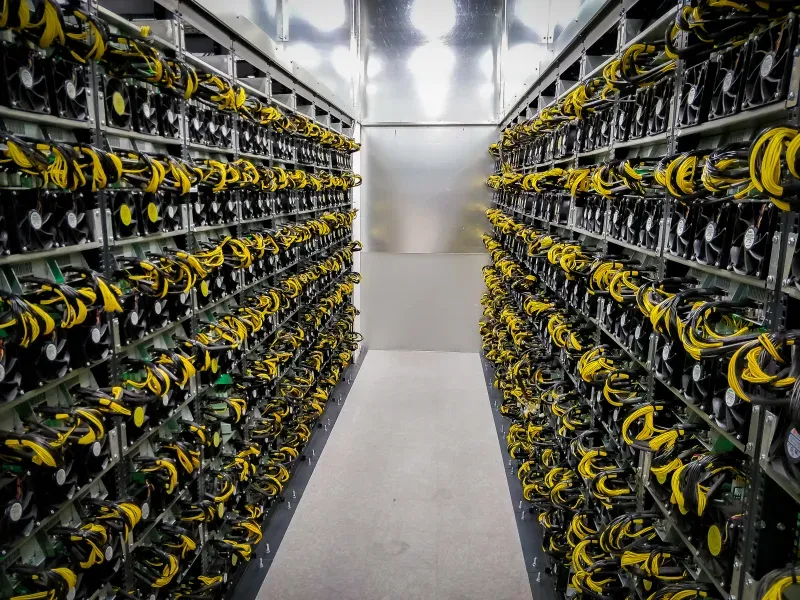
Publicly listed Bitcoin miners are offloading record volumes of BTC to fund their pivot to AI data centers, even as mining profitability deteriorates sharply. Bitcoin's network hashrate — the backbone of its security — posted its first quarterly decline in six years, CryptoSlate reported on the 20th.
According to CoinShares' Q1 report, the average all-in cash cost to mine one bitcoin among publicly listed miners stands at approximately $80,000. With BTC trading between $67,000 and $75,000 during the same period, miners are effectively booking a loss of roughly $19,000 per coin sold. Profitability has eroded rapidly following the April 2024 halving — which cut block rewards to 3.125 BTC — compounded by surging energy costs tied to the Iran conflict.
Record BTC Sell-Off Hits the Market
Squeezed by deteriorating margins, miners have been executing large-scale BTC liquidations. MARA sold 15,133 BTC (approximately $1.1 billion) in March alone, directing proceeds toward debt repayment and AI infrastructure investment. RIOT disposed of 4,026 BTC, while CORZ offloaded 1,992 BTC.
This goes beyond ordinary selling pressure — it signals a structural shift in the underlying business model. As miners redirect their core revenue stream from Bitcoin mining to AI infrastructure operations, capital available for reinvestment back into mining is shrinking accordingly.
$70B in AI Contracts Signed: 'From Miners to Data Center Operators'
Cumulative AI and high-performance computing (HPC) contracts across publicly listed miners have already surpassed $70 billion. CORZ signed a 12-year, $10.2 billion agreement with cloud AI firm CRWV, while HUT secured a $7 billion AI data center lease backed by Google (GOOG). WULF, RIOT, and IREN are pursuing similar transitions.
CoinShares projects that up to 70% of listed miners' revenue could come from AI by year-end, more than doubling the current share of approximately 30%. Markets are already pricing in this shift: miners with secured AI contracts trade at a price-to-sales multiple of 12.3x — more than double the 5.9x multiple assigned to pure-play mining peers.
First Quarterly Hashrate Decline in 6 Years — Mining Difficulty Drops 7.76%
Bitcoin's network hashrate — a key security indicator — has fallen approximately 4–6% year-to-date. The Q1 decline marks the first such drop since 2020, snapping a five-year streak of annual growth exceeding 10%. Hashrate currently sits around 1 zettahash per second (ZH/s), well below the October 2025 peak of 1.16 ZH/s.
Mining difficulty has also plunged 7.76% year-to-date, which theoretically lowers the cost of a network attack. Geographic concentration is emerging as an additional concern. With the U.S., China, and Russia collectively controlling roughly 68% of global hashrate, a continued exodus of U.S.-listed miners into AI could further concentrate the remaining hashrate in jurisdictions with lower transparency.
'BTC Reclaiming $100K Is the Inflection Point'
Bitcoin's automatic difficulty adjustment mechanism provides a short-term buffer, and some analysts argue that emerging-market miners in Paraguay, Ethiopia, and elsewhere are filling the void left by U.S. operators — potentially improving network decentralization. CoinShares projects that if BTC reclaims $100,000, hashrate could rebound to 1.8 ZH/s by year-end.
Industry participants broadly agree: "Whether the AI pivot is a temporary reaction or a permanent structural shift ultimately depends on the price of Bitcoin." At $100,000, mining margins recover and the pace of AI conversion slows. But if BTC remains below $70,000 for an extended period, the pivot accelerates — and the mining industry ecosystem built over the past decade effectively enters a phase of structural dismantlement.
📊 Related Stocks & ETFs
⛏ Miners (Transitioning to AI)
· MARA Holdings (NASDAQ: MARA)
· Riot Platforms (NASDAQ: RIOT)
· Core Scientific (NASDAQ: CORZ)
· Hut 8 (NASDAQ: HUT)
· IREN (NASDAQ: IREN)
· Bitdeer (NASDAQ: BTDR)
· CleanSpark (NASDAQ: CLSK)
· TeraWulf (NASDAQ: WULF)
🧠 AI Infrastructure Beneficiaries
· CoreWeave (NASDAQ: CRWV)
· AMD (NASDAQ: AMD)
· NVIDIA (NASDAQ: NVDA)
📈 ETFs
· Valkyrie Bitcoin Miners ETF (NASDAQ: WGMI) — Pure-play Bitcoin miner ETF
· ProShares Bitcoin Strategy ETF (NYSE: BITO)
· Amplify Transformational Data Sharing ETF (NYSE: SATO)
· Sprott Uranium Miners (NYSE: URNM) — AI & nuclear power infrastructure theme
Frequently Asked Questions
왜 채굴사들이 BTC를 대량 매도하나요?
비트코인 1개당 평균 생산 비용이 약 8만 달러인데 시세는 6만7천~7만5천 달러로 코인당 약 1만9천 달러 손실 구조이기 때문입니다. 2024년 4월 반감기로 블록 보상이 절반이 됐고 이란 전쟁으로 에너지 비용까지 급등하면서 수익성이 급속도로 악화됐습니다.
채굴사들의 AI 전환 규모는 얼마나 되나요?
공개 채굴사 전체 누적 AI·HPC 계약 규모가 700억 달러를 넘어섰습니다. CORZ는 코어위브와 12년간 102억 달러, HUT는 구글 지원으로 70억 달러 규모 계약을 체결했고, 코인셰어스는 연말까지 채굴사 수익의 최대 70%가 AI에서 나올 것으로 전망합니다.
해시레이트 하락이 비트코인 보안에 위협인가요?
1분기 해시레이트 하락은 2020년 이후 6년 만에 처음으로, 채굴 난이도도 7.76% 급락했습니다. 이론적으로 네트워크 공격 비용이 낮아진다는 의미입니다. 다만 자동 난이도 조정 메커니즘이 단기 보완 역할을 하고, 파라과이·에티오피아 등 신흥국 채굴사들이 빈자리를 채우고 있습니다.
AI 전환은 영구적인가요 일시적인가요?
결국 비트코인 가격에 달려 있습니다. 10만 달러 수준이면 채굴 마진이 회복돼 AI 전환 속도가 느려지지만, 7만 달러 이하에서 장기간 머물면 전환이 가속화되고 지난 10년간의 채굴 산업 생태계는 사실상 해체 수순에 들어간다는 분석입니다.



Wall Street's Defining Moments
See more
Sunday's SEC 8-K Earnings Filings Quiet, but Royal Gold Doubles Net Income and Launches Buyback
 RGLD
RGLDVeritone Earnings Shock Sends Shares Down 23%...York Space Systems Among 25 US Companies Filing SEC 8-K Earnings Reports
 YSS
YSS CODX
CODX IPWR+26
Applied Materials Posts Record Q3 Revenue of $9.1 Billion, All-Time High EPS
 AMAT
AMATSmart Money Briefing
Weekly summaries of Wall Street guru moves and crypto whale activity.