National Brain Tumor Society - May 2026
원문 보기 (영문) →한국어 번역이 곧 추가됩니다. 그 동안 아래 영문 원문 또는 출처 사이트를 참고해주세요.
The National Brain Tumor Society is the Cassandra Unchained Charity of the Month for May 2026, because for 30 years it has been unrelentingly investing in and uniting the brain tumor community to discover cures and effective treatments and advocate for both patients and caregiver, and because the need has never been greater.

May is Brain Tumor Awareness Month #graymay, and today, May 17th, is International Oligodendroglioma Day. The National Brain Tumor society says that is not all, and spits out some facts.
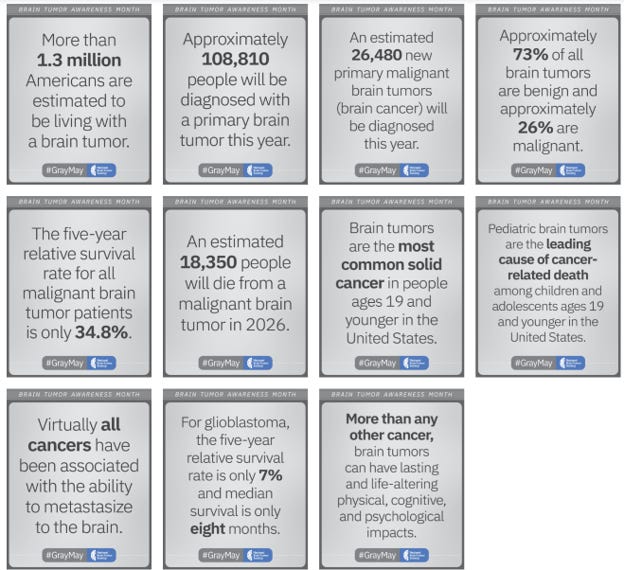
Glioblastoma Multiforme (GBM) is the bull shark of brain tumors. It is the most aggressive, deadly, and feared brain cancer.
GBM tragically took my brilliant longtime analyst and business partner Joseph Sipley in 2019, and recently my old friend Guy Spier has been fighting the same disease.
I recommend taking time to read Guy’s 2025 annual letter for his Aquamarine Fund, which he started in 1997.
https://www.aquamarinefund.com/annual-letter-to-partners-2025/
I find Guy’s letter both courageous and inspirational, as he has always been.
Most of us know someone who had died or is currently living with a brain tumor.
While not about brain tumors, I also highly recommend as a topical human interest story When Breath Becomes Air, a book written by the late young neurosurgeon Dr. Paul Kalanthi about living with his terminal cancer.
The National Brain Tumor Society assists in the education, support, advocacy and research for many types of brain and central nervous system tumors.
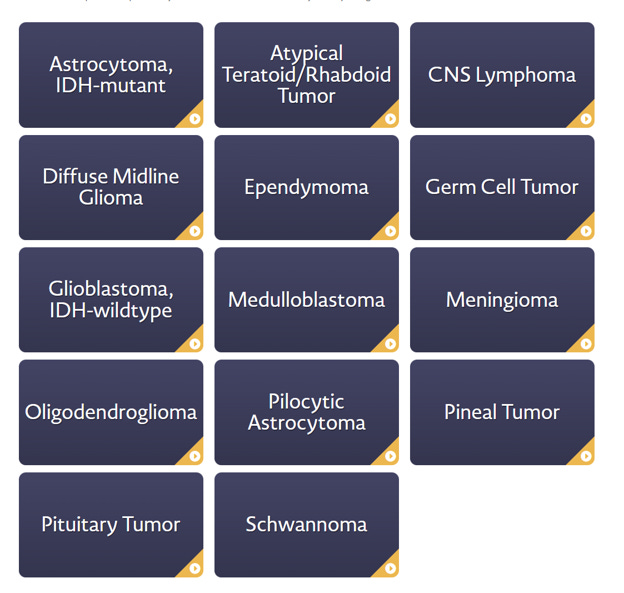
There are many more. In fact this is true for all cancers. There are roughly 200 cancers with an anatomical name, such as “brain cancer” or “lung cancer,” but there are so many variants that academics question if we even know how many types of cancer are out there.
For instance, a 2015 paper, Cancer classification in the genomic era: five contemporary problems, listed this problem regarding breast cancer classification.
For example, the analyses of human breast tumors by the TCGA [55] produced multiple answers to the “how many subtypes” question for the same sample series. It found that breast tumors’ gene expression data supported 13 classes with the use of a consensus cluster-based method, 12 classes with a second method, and five classes with the semi-supervised PAM50 method [56]. The concordance rate among the three results was modest, as the best-matched classes between any two methods only account for 50–60 % of the samples (our unpublished observation). Further, the study found seven breast tumor subtypes from microRNA data, five subtypes from methylation data, and five subtypes from copy number alterations, again with poor to modest agreement (per our analysis). While the classification solutions were described as “correlated” across data types, their differences impacted a large fraction of the samples, making it difficult to find a straight answer to the simple question: how many subtypes are there for breast cancer?
Brain cancer is no different, with over 100 types of brain and central nervous system tumors that have been recognized so far.
Hence, there is no such thing as a single research effort seeking a cure for all cancers. Rather, there are tens of thousands of research efforts are ongoing seeking treatments and cures for thousands of cancer types and variants.
Often, this critical research results not in cure but rather treatment that enables much higher quality of life and significant extension of life.
For instance, Joseph Sipley lived an incredible eight years with his GBM diagnosis because of cutting edge research that really worked for him. During that time he and wife had another child, and Joe got to see more of his two boys lives as they grew.
Miracles like this are on the upswing because the research effort never stops, but even more is needed.
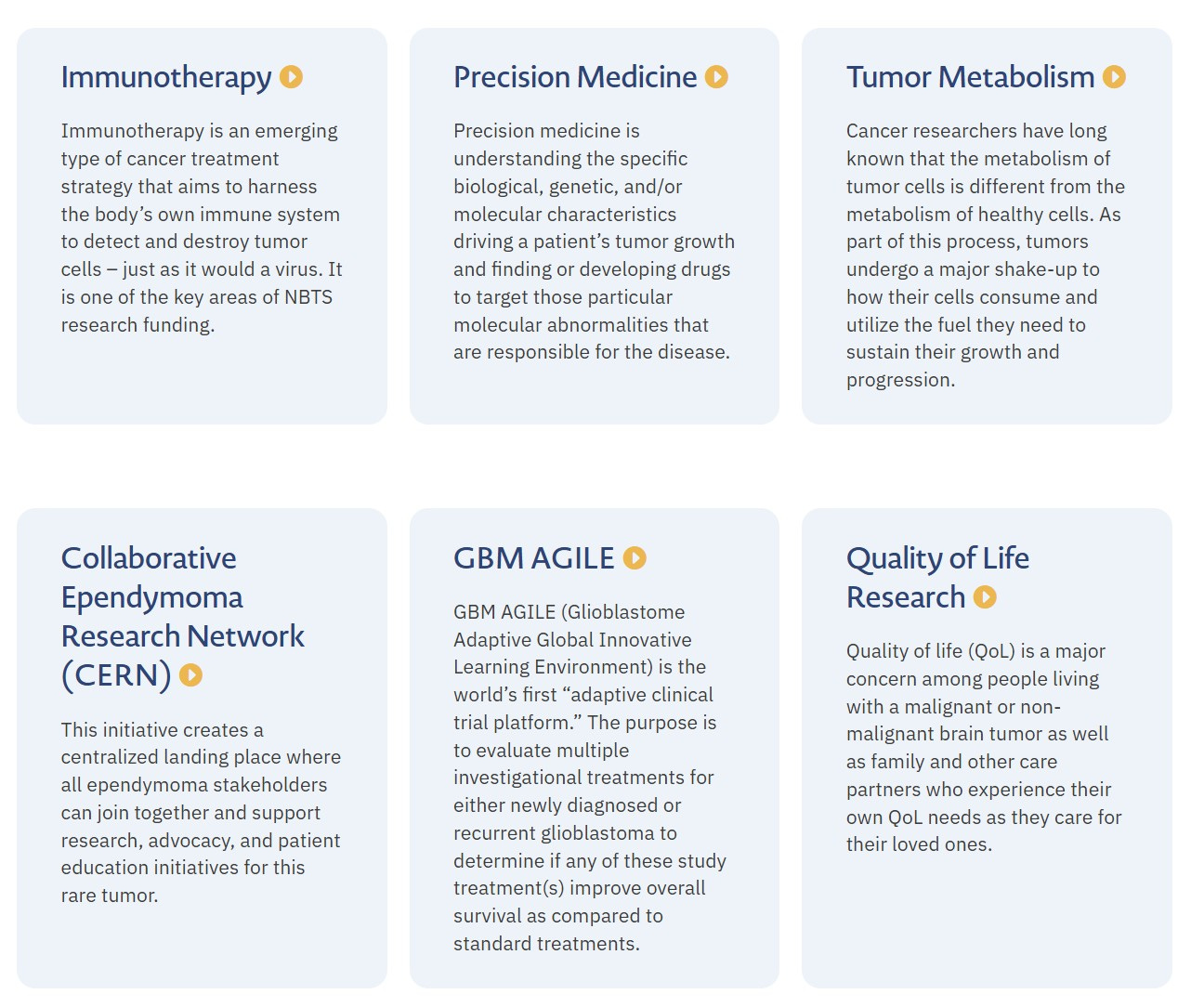
The National Brain Tumor Society supports research of many types.
Its flagship research initiative is the DNA Damage Response Consortium, which bring together adult and pediatric researchers to explore potential new treatments, but it does not stop there.

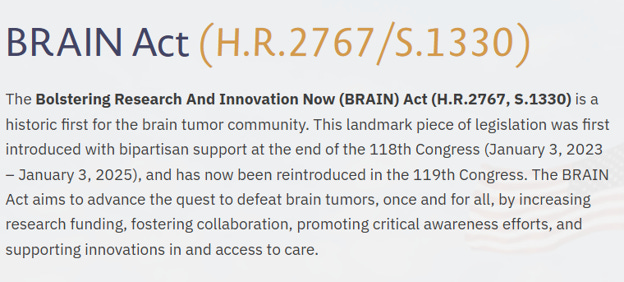
The National Brain Tumor Society also has advocated for national legislation such as the BRAIN Act.
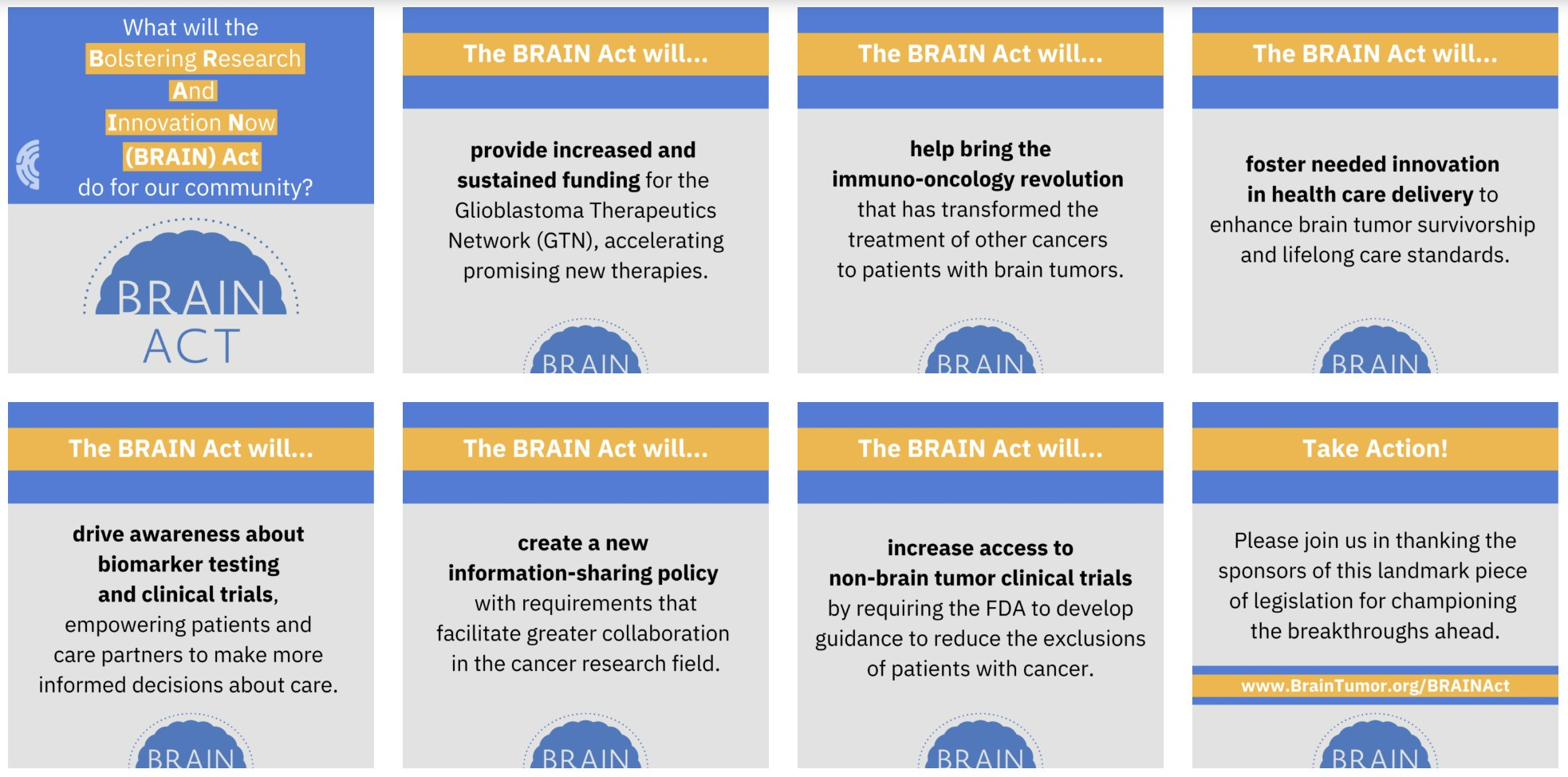
Cancer rates are highest in countries whose populations have the highest life expectancy, education level, and standard of living. These populations also have the wealth to fund research to find cures and treatments.
The good news is the overall cancer death rate is on the decline because of research and advocacy such as that done by the National Brain Tumor Society and the donors that support it.
Recent federal government funding cuts puts more pressure on private charities such as the National Brain Tumor Society to keep research on track.
Private charities therefore are working extra hard to continue progress on all research fronts into the many variations of cancer that are out there. This private charity effort is changing lives.
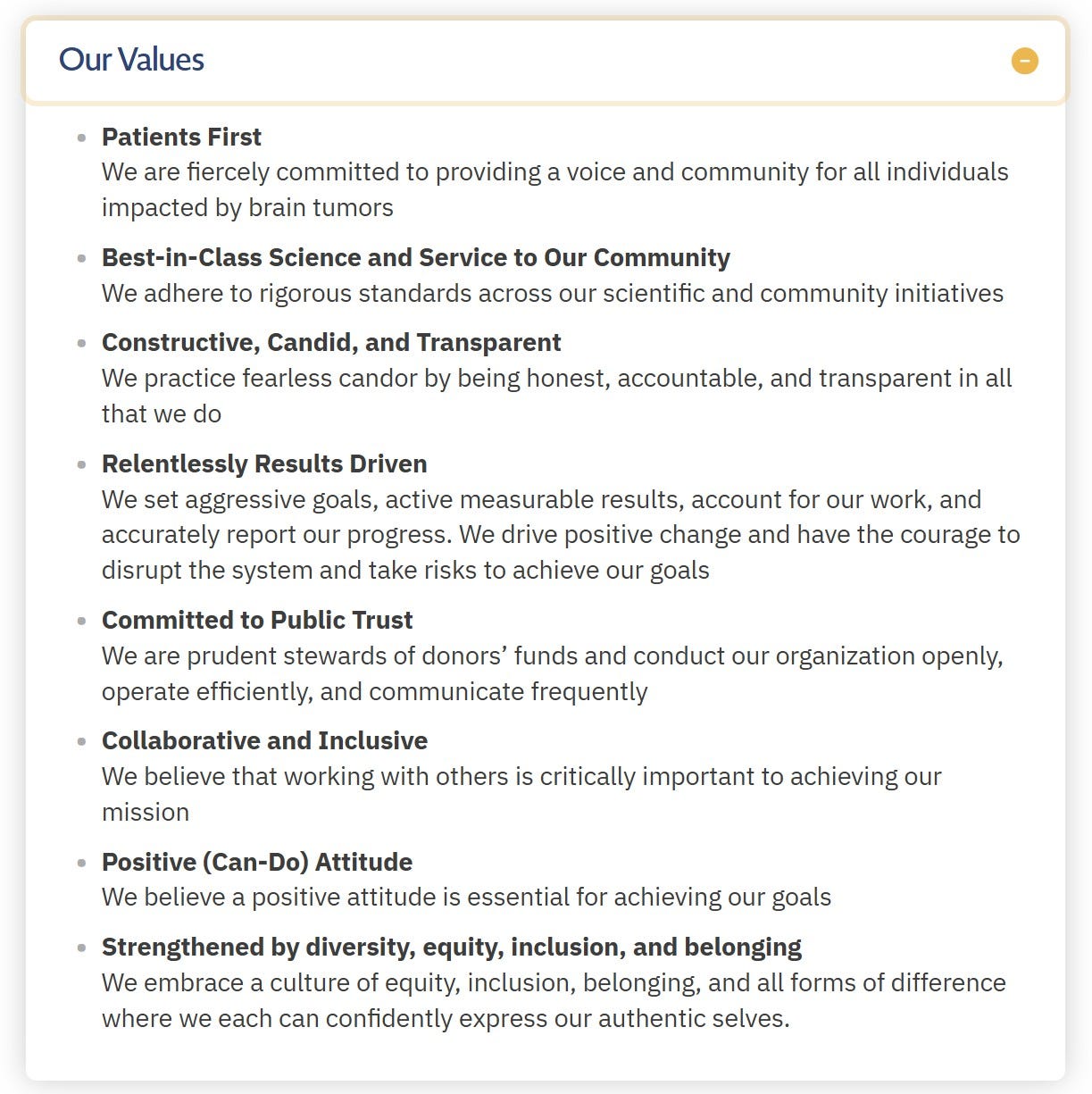
The National Brain Tumor Society is one such exceptional charity. Its values are on point, and it has the history and the organization to make a real difference today, tomorrow, and for a long time to come.
For this month of May 2026, 5% of gross revenues from this Cassandra Unchained Substack will be donated to the National Brain Tumor Society, both to honor Joseph and Guy and to support, wholeheartedly, the Society’s mission.
