Competition Is for Losers — Peter Thiel's Worldview
"Competition is for losers." Thiel sought out companies that don't compete — and built them himself. Palantir, politics, and the worldview of someone who shapes the future — the final chapter of our Peter Thiel trilogy.
Competition Is for Losers — Peter Thiel's Worldview
Peter Thiel's Worldview — Inteliview Guru Story · Peter Thiel EP.3 (Final)
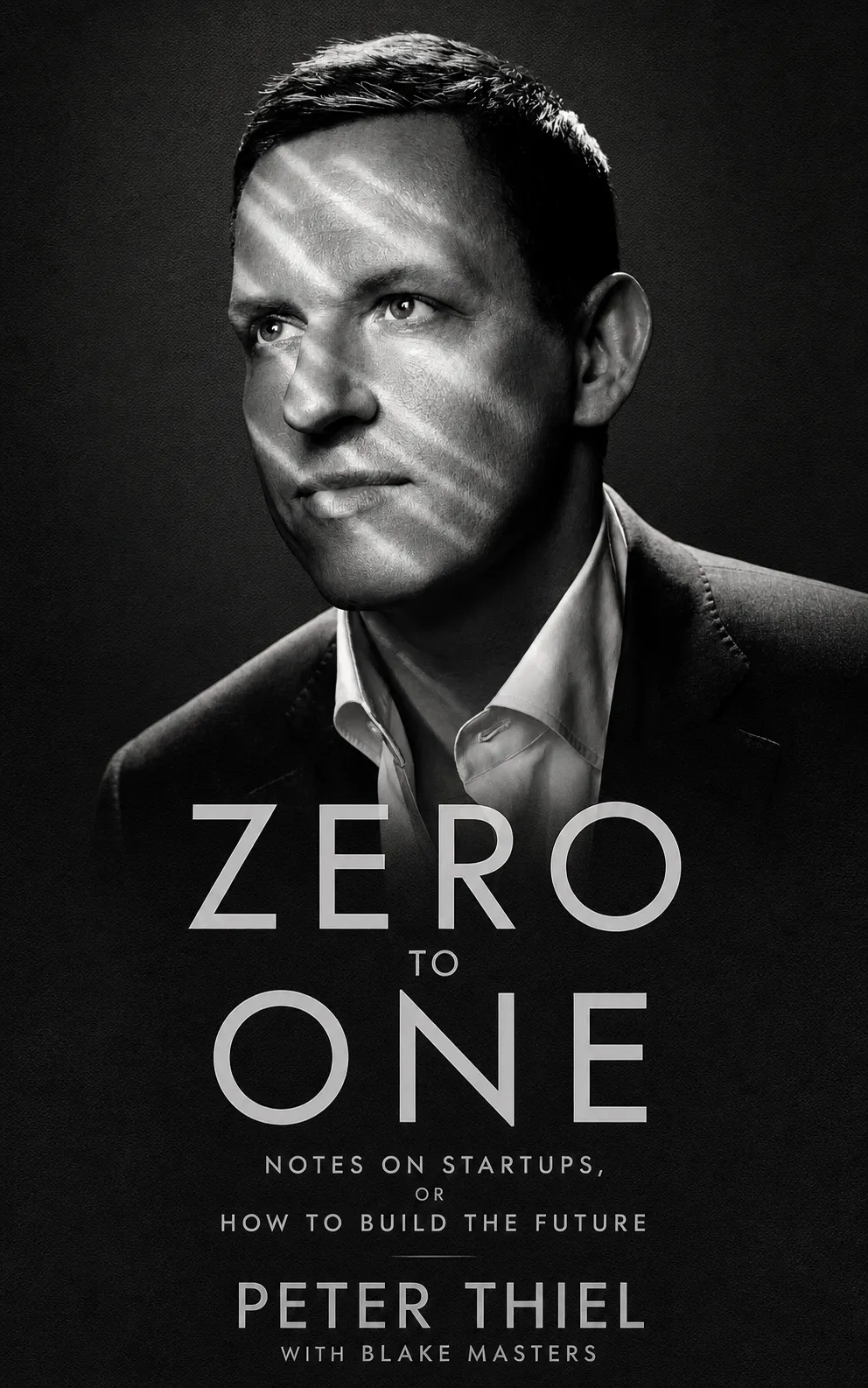
In 2012, Peter Thiel began teaching a course at Stanford University. The class was called "CS 183: Startup." Listed under the computer science department, it was anything but a coding course. What Thiel taught was a way of seeing the world. One student posted their lecture notes on a blog. They went viral. Those notes became a book — Zero to One. This is a record of the worldview Peter Thiel left behind as both an investor and a thinker.
1. Zero to One
To understand Thiel's framework, you need to grasp one essential distinction: going from Zero to One versus going from One to N.
One to N means replicating what already exists. If you have a typewriter, you make a hundred typewriters. You open a thousand Starbucks locations across China. You take a working model and scale it through repetition.
Zero to One means creating something that didn't exist before. Inventing the typewriter in a world without one. Building Google in a world without a search engine. Bringing something entirely new into existence.
Thiel's argument: real value is only created in the Zero to One moment. One to N spreads value — it doesn't create it.
This is the first pillar of his investment philosophy. The companies he backs are always ones that "create something that didn't exist before" — not companies competing in existing markets, but companies that build entirely new ones.
- PayPal did this. Sending money via email had never existed before.
- Facebook did this. A real-name-based social network had never existed before.
- Palantir did this. A data analytics platform built for intelligence agencies had never existed before.
- SpaceX did this. A reusable rocket had never existed before.
2. "Competition Is for Losers"
Thiel's most controversial claim.
"Competition is for losers."
Most business school textbooks treat competition as a positive force. Competition drives innovation, benefits consumers, and makes markets efficient. It's why Michael Porter's Competitive Strategy is required reading in MBA programs.
Thiel argued the exact opposite.
In a perfectly competitive market, every company's profit converges to zero. The fiercer the competition, the thinner the margins. Look at airlines. Dozens of carriers compete on the same routes. The result? Chronically low returns. Repeated bankruptcies. The U.S. airline industry has historically generated negative cumulative profit.
Now look at Google. It owns 90% of the search market. No real competition. Enormous margins. Its employees get free lunches and spend 20% of their time on personal projects. That kind of luxury is only possible because it's a monopoly.
Thiel's conclusion: a great company isn't one that wins in competition — it's one that avoids competition altogether. Monopoly is the ideal.
This stance directly contradicts textbook economics, where monopoly is a source of inefficiency and a target for regulation. Thiel flips this: monopoly, he says, is the source of innovation. Only a monopoly has the breathing room to invest in long-term R&D. A company fighting off competitors is too focused on quarterly results to make long-term bets.
Is he right? The debate continues to this day. Thiel himself acknowledges this is "a truth most people disagree with."
3. Palantir — The Most Controversial Company
The company that most radically embodies Thiel's worldview is Palantir Technologies.
Founded in 2003, with Thiel as a co-founder. The name comes from the "palantír" in Tolkien's The Lord of the Rings — a magical seeing stone that allows the user to observe things far away.
What Palantir does: large-scale data analytics. It builds software that connects and analyzes vastly different types of data — emails, financial transactions, phone records, satellite imagery, social media — all within a single platform.
Its first client: the CIA.
The foundation for Palantir came from Thiel's experience running PayPal, where he helped build a system to detect fraudulent transactions. Pattern recognition technology that could identify fraud among millions of daily transactions — applied now to national security. Tracking a terrorist's financial activity, communications, and movements.
There were reports that Palantir's software was used in tracking down Osama bin Laden. Palantir neither confirmed nor denied this.
Since then, Palantir has become a core software provider for the CIA, NSA, FBI, U.S. Army, Marine Corps, Air Force, and other American intelligence and military agencies — and has expanded to allied intelligence services in the UK, France, Israel, and beyond.
It went public on Nasdaq in 2020. As of 2024–2025, its market capitalization has surpassed $200 billion, with its stock surging as demand for defense and intelligence data analytics exploded in the AI era.
4. The Case Against Palantir
Palantir is the most controversial company in Silicon Valley.
Criticism #1: The Surveillance State. At its core, Palantir's technology is a surveillance tool. It is used by governments to collect and analyze data on citizens. After Edward Snowden's revelations about NSA surveillance, civil liberties organizations intensified their criticism of Palantir.
Criticism #2: Immigration Enforcement. During the Trump administration, Palantir's software was used by ICE (Immigration and Customs Enforcement) to track undocumented immigrants. Its connection to family separation policies sparked widespread protests. Even within Silicon Valley, a growing number of engineers began refusing to work at Palantir.
Criticism #3: War Profiteering. There is a moral objection to Palantir profiting by selling software to military and intelligence agencies. This stands in sharp contrast to Google's withdrawal from the Pentagon's Project Maven, after employees protested that they would not build AI for use in warfare. Palantir took the opposite position.
Thiel's response has been consistent.
Silicon Valley is hypocritical. Google tried to offer a censored search engine to the Chinese government. That was fine — but working with the U.S. Department of Defense isn't? Why is protecting America's security immoral?
Yes, technology is a double-edged sword. But the answer isn't to stop making swords. The answer is to make sure good people have them.
5. Politics — Standing on the Opposite Side of the Majority
Thiel is also the most politically outspoken figure in Silicon Valley. Most of the Valley leans politically liberal — Democratic Party support, diversity and inclusion, climate action, pro-immigration.
Thiel is the opposite: a conservative libertarian. Minimal government regulation. Strong national defense. Restricted immigration.
The most shocking moment in his political career was his endorsement of Donald Trump in 2016. Thiel delivered a speech supporting Trump at the Republican National Convention. Silicon Valley was stunned. Trump stood against nearly every value the Valley held dear — diversity, globalism, welcoming immigrants. Even some of Thiel's colleagues, including members of the PayPal Mafia, publicly criticized him.
After Trump's election, Thiel joined the presidential transition team, serving as a bridge between Silicon Valley and Washington.
His political influence carried into the 2024 election as well. J.D. Vance, whom Thiel had backed, was chosen as Trump's running mate. Vance had previously worked at Thiel's venture capital fund. A member of the PayPal Mafia had become Vice President of the United States.
6. Thiel's Worldview
There is a single worldview that runs through all of Thiel's politics, investments, and philosophy.
Most people think the future is an extension of the present. Tomorrow will be a little better than today. Technology will advance incrementally. Society will improve gradually. I think that's wrong. The future is not an extension of the present. The future is something someone builds — deliberately. And the people who build the future are the ones who hold truths that most people disagree with.
This worldview explains everything he does.
- Investing: He backs monopolies with no real competition. Companies that go from Zero to One. He does not invest in companies that go from One to N.
- Building: He co-founded Palantir — creating an entirely new market in data analytics for intelligence agencies that had never existed before.
- Politics: He goes against the mainstream. When Silicon Valley goes left, he goes right. When most people oppose Trump, he supports him. Whether right or wrong, he always stands on the opposite side of the majority.
This is both his greatest strength and his greatest vulnerability. Standing against the majority is sometimes a stroke of genius, and sometimes dangerous isolation. When Soros stood against the Bank of England, it was a stroke of genius. When Livermore stood against the market, it was sometimes brilliant and sometimes catastrophic. How Thiel's contrarianism will ultimately be judged remains to be seen.
This is the question Thiel posed to students in his Stanford lecture. What's your answer? "What important truth do very few people agree with you on?"
7. Thiel and Munger — A Study in Contrasts
Comparing Thiel's worldview with Charlie Munger's reveals a fascinating contrast.
Munger: "Be rational. Avoid being stupid."
Thiel: "Find the truth that most people disagree with."
Munger embodies defensive thinking. The goal is to minimize mistakes. Inversion. Avoiding foolishness. The "Too Hard" pile. Never investing in what you don't understand. This is how you stay undefeated for sixty years.
Thiel embodies offensive thinking. The goal is to find what others can't see. Seeking monopolies. Creating Zero to One. Standing against the crowd. This is how you turn an investment into a 2,000x return.
Which is right? Both are. They simply apply to different situations. Munger's approach is powerful for preserving wealth — sixty years of compounding, the stability of Berkshire Hathaway. Thiel's approach is powerful for creating wealth — turning $500,000 into $1 billion, from PayPal to Palantir.
The ideal investor probably holds both. Attack like Thiel, defend like Munger. But very few people can do both at the same time.
- EP.1
- 페이팔 마피아 — 한 팀에서 수조 달러의 제국, 네트워크의 힘
- EP.2
- 50만 달러의 페이스북 — 약 2,000배. 사람에 대한 베팅. "팔지 마라"
- EP.3
- 경쟁은 패자의 게임 — Zero to One. 독점. 팔란티어. 세계관
- 핵심 명제
- "대부분이 동의하지 않는 진실을 찾아라"
- 대표 회사
- 페이팔, 팔란티어, Founders Fund (SpaceX/Anduril/Stripe 등)
- 대표 정치 행보
- 2016 트럼프 지지 / 2024 J.D. 밴스 부통령
- 핵심 저서
- 『Zero to One』 (2014, 스탠포드 CS 183 강의 기반)
- 평가
- 실리콘밸리의 가장 독창적인 사상가 vs. 억만장자의 권력 남용 — 양극단
8. Three Lessons to Take Away
First: Look for the "Zero to One" moment.
The greatest returns in investing come from companies that create entirely new categories — not companies competing in existing markets, but companies that build markets that never existed. PayPal, Google, Facebook, Tesla, Palantir. What they all have in common is that nothing like them had existed before. The same holds in the Korean market. Instead of chasing companies that are "a little better than existing services," look for companies building something that has never existed. They're hard to find. That's exactly why finding one is so valuable.
Second: Learn to recognize the signs of a monopoly.
The monopoly Thiel talks about is not an illegal one. It's a natural monopoly built on technological superiority, network effects, economies of scale, and brand loyalty — the same concept as the "moat" Munger identified in See's Candies. Ask yourself: does the company you're investing in hold a monopolistic position? Does it have a structural advantage that competitors simply cannot replicate? If you can answer "yes" to those questions, you've likely found the best long-term investment available.
Third: Don't be afraid of the controversial.
Thiel's investments and political moves have always been controversial. He stands against the mainstream. He's sometimes wrong — but when he's right, the payoff is overwhelming. In investing, there are no excess returns where everyone already agrees. If you make an investment decision and everyone around you nods along, the chances of earning an outsized return are slim. Conversely, if you make a call and people push back, both the probability of being wrong and the potential reward for being right are large. Understanding this asymmetry is the core lesson Thiel has to offer.
Once you've made your choice, reveal what the legend actually did
9. Epilogue — The Person Who Builds the Future
As of 2026, Peter Thiel is 58 years old. Founders Fund remains one of Silicon Valley's most influential venture capital firms. Palantir's market cap has surpassed $200 billion. His political influence reached its apex with J.D. Vance's election as Vice President.
Yet opinions on Thiel remain sharply divided.
His supporters call him "Silicon Valley's most original thinker." PayPal, Facebook, Palantir — three companies alone that defined a generation.
His critics call him "a billionaire abusing his power" — surveillance technology, political meddling, media lawsuits, anti-diversity.
Who's right? Probably both.
Thiel himself seems unbothered by the debate. The final line he wrote in Zero to One in 2014:
Our task today is to find singular ways to create the new things that will make the future not just different, but better — to go from 0 to 1. The essential first step is to think for yourself.
Let's look back at every master featured in the Guru Story series.
- Buffett taught us to buy great companies and hold them for a long time.
- Munger taught us to avoid doing stupid things.
- Soros taught us to bet big when the world has it wrong.
- Burry taught us to trust what the data actually shows.
- Lynch taught us to find investments in everyday life.
- Livermore taught us that if you can't beat yourself, you can't beat the market.
- Keith Gill taught us that ordinary people can stand up to Wall Street.
- Ackman taught us that you can get back up, even after devastating defeat.
And Peter Thiel taught us one more thing.
The future is not something you predict — it's something you build.
Every other master on this list read the market. Its patterns, its manias, its panics. Thiel built markets. Markets that had never existed before. With PayPal. With Facebook. With Palantir.
That is what sets him apart from everyone else in the Guru Story series. And it is the final message that InteliView's Guru Story wants to leave you with.
Reading the market matters. But building the market matters more.
Which one are you?
What's your take on this story?
What do you think about Peter Thiel's decision?
Sign in to participate
Sign InPeter Thiel Today
Where is Peter Thiel investing right now? See their latest 13F portfolio and current convictions.