
Asics, Hoka & New Balance Fill Nike's Void — Running Shoe Market Upended
The real winners of the running shoe market war. The gap created by Nike's five self-inflicted headwinds has been filled by Asics (stock up 7x), Hoka ($2.2B revenue), and New Balance ($817M Korea revenue).
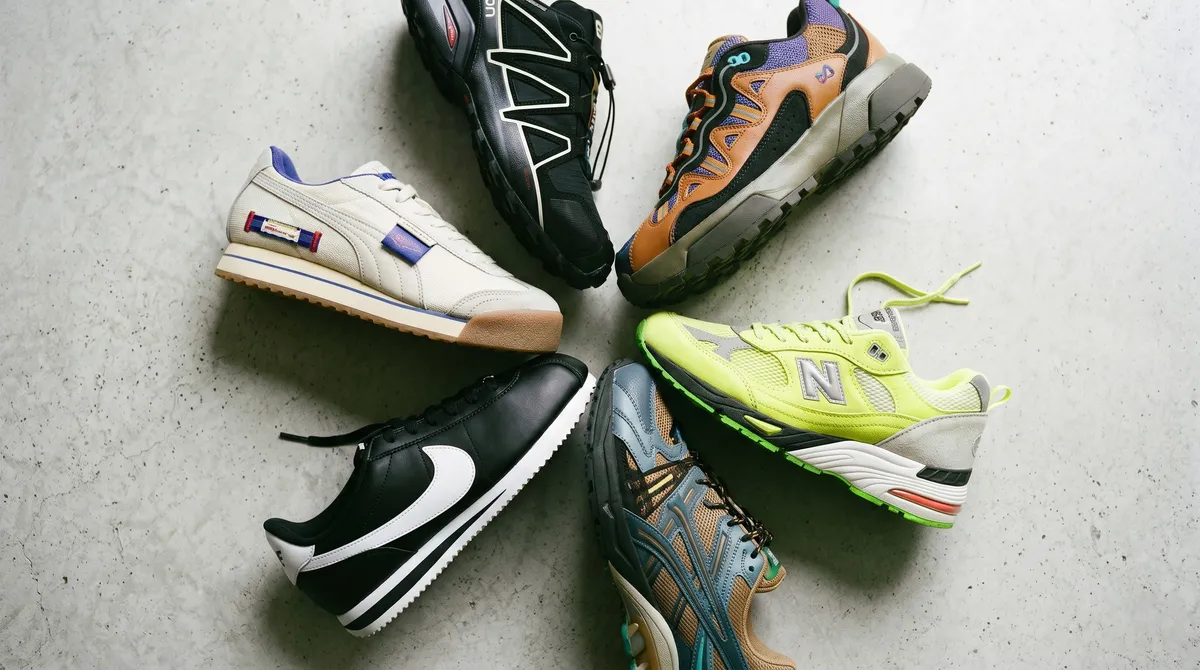
In an era where riverside running crews have become part of everyday life, the shoes on runners' feet tell the story of the market. Just five years ago, Nike was the undisputed king of the athletic footwear industry. Today, a widely accepted truth circulates in running communities: "Serious runners wear Asics or New Balance." This shift in perception is no passing trend — it is etched into stock charts and earnings reports worth billions of dollars.
A $681M Market Opens Up
South Korea's running shoe market surpassed $681M for the first time in 2025. As the post-COVID running boom evolved from a one-off trend into a lifestyle, the broader athletic footwear market expanded to roughly $2.7B. The brands reaping the benefits, however, are not Nike.
According to resale platform StockX, Nike and Jordan brand sales fell 21% year-over-year in the first half of 2024, while Asics surged 600% and Adidas jumped 90%. The numbers tell a clear story: demand that Nike lost did not evaporate — it migrated directly into competitors' revenue.
Nike's Crisis — Five Self-Inflicted Headwinds
Nike's struggles do not stem from a single cause. They are the result of simultaneous failures across strategy, inventory, product innovation, geopolitics, and corporate philosophy.
① D2C Strategy Backfire. During the COVID era, Nike aggressively pivoted to a direct-to-consumer model — severing ties with boutique retailers and Amazon to capture higher margins and own customer data. Margins improved initially, but the company overlooked a critical function of retail shelf space: it acts as a constant, ambient advertising channel. The pathway through which new customers discovered and tried on Nike products was effectively closed off.
② Inventory Glut. Once Nike absorbed the volume previously distributed through wholesale partners, inventory ballooned 44%. Repeated promotional discounting to clear the excess eroded the brand's premium positioning. "Only a fool pays full price" became a common sentiment, and the ripple effect ultimately collapsed resale values for key lines like Jordan and Dunk.
③ Loss of Product Competitiveness. This is perhaps the most damaging failure. Nike leaned heavily on colorway rotations and collaborations built around classic silhouettes — Jordan, Dunk, Air Force 1 — while losing its identity as a performance sports brand. In the meantime, emerging challengers like Hoka, On Running, and Brooks rapidly captured the functional running segment. This is the defining reason the narrative hardened into "Nike is fashion; Asics is running."
④ China Market Collapse. A consumer boycott triggered by the Xinjiang cotton controversy opened the door for local players like Anta and Li-Ning to seize significant ground. China revenue fell 20% year-over-year in fiscal Q4 2025.
⑤ Short-Term Earnings Bias. This is the root cause underpinning all four issues above. Management's prioritization of near-term profitability metrics over long-term R&D investment and brand infrastructure is widely cited as the decisive strategic misstep.
The incoming CEO has pivoted toward rebuilding wholesale distribution and increasing the share of performance products in the lineup. Wall Street's consensus: "The direction is right, but the recovery will take time." The brand's underlying equity remains intact — but winning back the trust of the running community is an entirely different challenge.
Asics: Stock Up 7x in Five Years — The Return of the Performance Running Shoe
Asics' turnaround is best illustrated by its stock chart. Shares of Asics (TSE: 7936) have risen more than 7x over the past five years. As of April 2026, the stock trades around ¥4,487, with a 52-week high of ¥5,460. Even as running shoe stocks broadly pull back, analysts note that Asics has been running its own race.
The secret is a return to fundamentals. The Gel-Kayano cushioning line has earned cult status among full marathon finishers as the quintessential running shoe, with used market resale prices exceeding ¥20,000–¥30,000. The 2025 Boston Marathon winner's choice of Asics further cemented its image as a shoe worn by serious athletes. Domestic performance has been equally strong: Asics Korea posted 2025 revenue of $127M (₩1,865B), up 30% year-over-year, with operating income of $23M (₩343B), up nearly 40%.
While Nike chased fashion collaborations, Asics quietly refined its midsole technology. That difference compounded into a 7x stock return over five years.
Hoka: $2.2B in Annual Revenue — A New Challenger Enters the Big Five
Hoka is the fastest-growing brand in the category. Parent company Deckers (NYSE: DECK) reported Hoka's fiscal year 2025 global revenue at $2.2 billion, up 23.6% year-over-year. The brand is now widely regarded as having broken into the top five of the global running shoe market alongside Nike, New Balance, Asics, and Adidas.
In South Korea, Hoka's business tripled from $7M (₩105B) in 2023 to $21M (₩306B) in 2024. However, an owner-risk event at domestic distributor Joyworks & Co. in early 2026 has made a restructuring of the distribution setup inevitable. Musinsa, Shinsegae International, E.Land World, and LF are all reportedly positioning for the next distribution partnership — making the choice of the successor distributor a pivotal variable in Hoka's next growth phase.
New Balance — Private Company, Public-Company-Level Growth
New Balance is not a publicly listed company. But its revenue trajectory is one that any listed sports brand would envy. Korean New Balance, operated under license by E.Land World, grew from approximately $409M (₩6,000B) in 2021 to over $817M (₩1.2T) in 2025 — doubling in four years. Year-over-year growth has held steady at around 20%.
New Balance's winning formula is a masterful blend of retro aesthetic and performance credibility. The launch of the FuelCell SC Trainer v3 drew an opening-day queue of 500 shoppers. The brand also claimed the top spot in the Sports Performance category at the 2025 FashionBiz Awards for the second consecutive year. Where Asics targeted core runners, New Balance positioned itself as a shoe that works for both running and everyday wear — absorbing a significantly broader consumer base.
Performance Wins
| Nike | Asics | Hoka | New Balance | |
|---|---|---|---|---|
| Positioning | Lifestyle / Collaborations | Core Runner / Performance | High Performance | All-Around (Performance + Daily) |
| Domestic Performance | Global weakness persists | Revenue +30%, Operating Income +40% | Revenue 3x in 3 years | Revenue $817M, 2x in 4 years |
| Stock / Valuation | NKE -8.42% (annual) | 5-year +700% | DECK +11% (annual) | Private (E.Land) |
| Current Issues | D2C failure, CEO transition | Outperforming peers | Distributor transition risk | E.Land license structure |
What is playing out in the athletic footwear market right now is not merely a product competition. It is a reaffirmation of a fundamental principle: brands that protect performance survive; brands that depend on fashion falter. Over the five years that Nike devoted to collaborations and colorway cycles, Asics was engineering its midsole, Hoka was perfecting maximal cushioning, and New Balance was refining the FuelCell platform. The results speak through stock prices and revenue figures.
There is still shelf space waiting for Nike's return. But those shelves already have other names on them.
Frequently Asked Questions
Why has Nike lost market share in the running shoe segment?
Nike's decline stems from five simultaneous self-inflicted headwinds: a D2C strategy that cut off key retail channels, a 44% inventory glut that triggered brand-damaging discounting, a loss of product innovation credibility, a collapse in China revenue following the Xinjiang cotton boycott, and a management culture that prioritized short-term earnings over long-term brand investment.
Which brands have benefited most from Nike's struggles?
Asics (stock up 7x over five years), Hoka (annual revenue of $2.2B, up 23.6%), and New Balance (Korea revenue exceeding $817M, doubling in four years) have been the primary beneficiaries, collectively filling the void left by Nike in the performance running segment.
Which stocks should investors watch in the running shoe space?
Hoka's parent company Deckers (NYSE: DECK) and Asics (TSE: 7936 / OTC: ASCCY) are the core beneficiary plays. Nike (NKE) is also worth monitoring for a potential recovery, given its new CEO's pivot toward wholesale restoration and performance product investment.


3 Dividend Stocks to Reduce Market Crash Risk: Medtronic, Realty Income, ExxonMobil
 MDT
MDT O
O XOM+2
XOM+2
Top High-Yield Dividend Stocks: Brookfield Infrastructure, Clearway Energy, Enterprise Products
 BIP
BIP BIPC
BIPC CWEN+3
Goldman Sachs Raises Tesla Q2 2026 Delivery Forecast to 420K — Europe Up 85%, US Down Double Digits
 TSLA
TSLA RIVN
RIVN LCID+4
Wall Street's Defining Moments
See more




Smart Money Briefing
Weekly summaries of Wall Street guru moves and crypto whale activity.