Trump-Xi Beijing Summit: Boeing Deal, Soybean Billions, Dueling Tariff Narratives, Taiwan Warning
Trump concluded his Beijing summit with Xi Jinping, touting a 200-jet Boeing deal and billions in soybean purchases. China offered a different narrative emphasizing tariff reductions, while Xi privately warned that mishandling Taiwan could push bilateral relations to a "dangerous place."
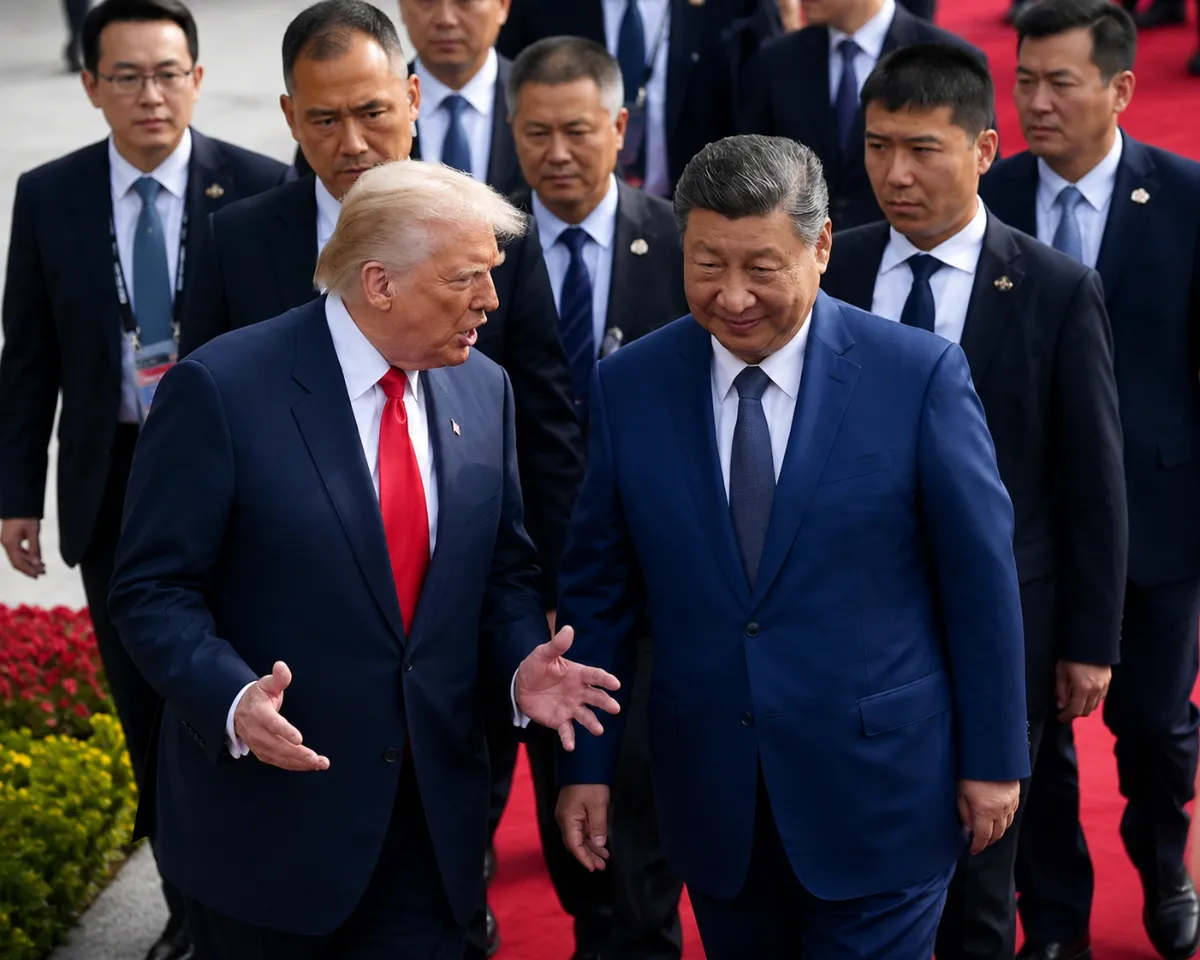
- Trump and Xi concluded their Beijing summit with a 200-jet Boeing deal and soybean commitments, but the two sides offered divergent accounts of tariff negotiations
- Xi privately warned Trump that mishandling Taiwan could push bilateral relations to a "dangerous place."
President Trump concluded a two-day summit in Beijing with President Xi Jinping. The U.S. is touting a 200-jet Boeing deal, a "billions of dollars" soybean purchase agreement, and a new Board of Trade. China is pushing a different narrative — emphasizing tariff-cut discussions — while Xi privately warned Trump that mishandling Taiwan could push bilateral relations to a "dangerous place."
Speaking to reporters aboard Air Force One on the way home, Trump declared he had struck "fantastic trade deals, great for both countries." Xi called the visit "historic and landmark" and accepted Trump's invitation for a reciprocal White House visit on September 24. But the publicly announced specifics were thin, and the two sides offered sharply different accounts of what was agreed.
Boeing 200 Jets, Soybeans "in the Billions" — What the U.S. Is Claiming
The most concrete outcome is a Boeing deal. China agreed to purchase 200 Boeing jets, with a potential option for an additional 750 planes discussed. Boeing confirmed the deal.
Trump said China agreed to buy American soybeans "in the billions of dollars." U.S. Trade Representative Jamieson Greer confirmed deals on Chinese purchases of agricultural products had been "firmed up." But China's Foreign Ministry did not confirm any such deals, saying only that both sides agreed to "maintain stable trade ties based on equality, mutual respect and mutual benefit."
- 200 Boeing jets confirmed (Boeing officially confirmed)
- Additional 750 jet option discussed
- U.S. soybeans, beef, and poultry purchase deal — not confirmed by China
- New "Board of Trade" to manage the relationship without reopening tariff negotiations
- Xi accepted Trump's invitation for White House visit on September 24
Dueling Trade Narratives — Trump "No Tariffs Discussed," China Talks Up Tariff Cuts
The strangest moment of the summit is the collision of narratives. Trump told reporters he and Xi "did not discuss tariffs at all." China, meanwhile, emphasized tariff reduction discussions in its own framing.
The context is last October's trade truce. At that time, the U.S. suspended triple-digit tariffs on Chinese goods while China eased restrictions on rare earth exports critical for semiconductors, EVs, and AI. That truce expires in November. Rather than reopen negotiations directly, both sides agreed to handle the relationship through the new Board of Trade.
"The Board of Trade is designed to give both countries a channel to manage the relationship without having to reopen tariff negotiations."
Xi's Taiwan Warning — 'Mishandling This Could Push Us to a Dangerous Place'
The most serious message of the summit came from Xi directly. In a closed-door session, Xi told Trump that if the two countries mishandle disagreements over Taiwan, it "could push the entire China-U.S. relationship into an extremely dangerous place." The U.S. summary of the talks omitted this warning.
The immediate issue is a $14 billion arms sales package to Taiwan currently awaiting Trump's approval. China has reiterated strong opposition to the sales, and Trump had flagged in advance that Taiwan would come up.
Hormuz and Energy — The Iran War Sets the Context
The U.S. readout focused most heavily on the Strait of Hormuz. With the Iran war effectively blocking the chokepoint that carries 20% of global oil and gas, both leaders agreed on the need to reopen it. Xi expressed interest in buying U.S. energy to reduce China's dependence on Middle Eastern supplies.
Reports also emerged that Iran agreed to allow Chinese ships to pass through the strait. Trump asked China to use its influence over Iran to help end the conflict.
Semiconductors and Rare Earths — What China Wants
China's core ask is an easing of U.S. export controls on semiconductor manufacturing equipment and advanced chips. The U.S. currently restricts sales of ASML equipment and Nvidia's latest GPUs to China. Beijing used these restrictions as a negotiating lever throughout the summit.
On rare earths, the trade truce holding means China's export restriction relaxation remains in place — keeping stable supplies of materials critical to semiconductor, EV, and defense manufacturing.
Frequently Asked Questions
What was actually agreed at the Trump-Xi summit?
Confirmed: 200 Boeing jets (Boeing officially confirmed), a new Board of Trade, and Xi's acceptance of a White House visit on September 24. Claimed but unconfirmed by China: soybeans and agricultural product purchases 'in the billions.' Both sides' public statements diverged significantly on what was agreed.
What happened to tariffs?
Trump said tariffs 'were not discussed at all.' China said tariff reduction was discussed. The October trade truce — U.S. suspending triple-digit tariffs, China easing rare earth export restrictions — remains in place until it expires in November.
Why did Xi warn Trump about Taiwan?
A $14 billion U.S. arms sales package to Taiwan is awaiting Trump's approval. Xi's warning was direct but absent from the U.S. summary of the talks — a sign the issue remains sensitive and unresolved between the two sides.
What does this summit mean for rare earths and semiconductors?
The sustained trade truce keeps China's rare earth export restriction relaxation in place — good for semiconductor, EV, and defense supply chains. On semiconductor export controls (ASML equipment, Nvidia GPUs), no concrete changes were made; China used it as a bargaining chip but didn't secure a concession.
Why does the September White House summit matter?
It would be Xi's first U.S. visit since 2015 and his first in Trump's second term. The unresolved issues from this Beijing summit — tariff negotiations, semiconductor export controls, Taiwan arms sales — are likely to be the core agenda at the second meeting.

ExxonMobil Posts 4-Year-High Profit but Misses Estimates as AbbVie, Colgate Among 23 Companies Report Earnings
 XOM
XOM LIN
LIN LYB+25
SEC Receives 24 Earnings Filings, 14 Regional Banks Report en Masse — Newmont, Nasdaq, Snap-on Join In
 ASPS
ASPS PKG
PKG BPRN+20
Over Half of America's Largest Cities See Home Price Declines — Case-Shiller Hits Weakest Since July 2023
 DHI
DHI LEN
LEN EQR+2
EQR+2Wall Street's Defining Moments
See more

Sunday's SEC 8-K Earnings Filings Quiet, but Royal Gold Doubles Net Income and Launches Buyback
 RGLD
RGLDVeritone Earnings Shock Sends Shares Down 23%...York Space Systems Among 25 US Companies Filing SEC 8-K Earnings Reports
 YSS
YSS CODX
CODX IPWR+26
Applied Materials Posts Record Q3 Revenue of $9.1 Billion, All-Time High EPS
 AMAT
AMATSmart Money Briefing
Weekly summaries of Wall Street guru moves and crypto whale activity.