
SEC Tokenized Stock 'Innovation Exemption' Expected Imminently — Hyperliquid Already Holds $1.2B Market
The SEC is expected to announce an innovation exemption for tokenized stocks as early as this week. Hyperliquid's HIP-3 framework has already built a $1.2B+ tokenized equity and commodity futures market ahead of any regulatory framework.
- The SEC is expected to announce an innovation exemption for tokenized stocks as early as this week, while Hyperliquid's HIP-3 framework has already built a $1.2B+ tokenized equity and commodity futures market ahead of any formal rules
- Industry estimates suggest moving just 1% of global equities on-chain could create a $1.3 trillion new market
The U.S. Securities and Exchange Commission (SEC) is expected to announce an 'innovation exemption' framework for tokenized stocks as early as this week — the first official regulatory structure to allow publicly listed company shares to be issued and traded as blockchain-based digital tokens. While regulators are still designing the rules, decentralized exchange Hyperliquid has already built a multi-billion-dollar tokenized asset market and established facts on the ground.
SEC Prepares Its First Regulatory Framework for Tokenized Stocks
According to Bloomberg reporting on May 18, the SEC plans to release its innovation exemption framework as early as this week. The core of the regulation defines the conditions and scope under which listed company shares can be issued and traded as blockchain tokens.
A notable detail under consideration: tokens issued without the underlying company's explicit approval may be allowed to trade. In such cases, token holders may not receive traditional shareholder rights such as voting or dividend entitlements — a structure inherent to trading on decentralized crypto platforms.
Hyperliquid Built the Market Before the Rules Existed
While the SEC was still designing its framework, Hyperliquid had already grown tokenized stock and commodity futures markets to material scale — entirely outside existing regulation.
Hyperliquid's HIP-3 framework allows anyone who stakes 500,000 HYPE (approximately $25 million) to deploy their own perpetual futures exchange directly on the protocol. trade.xyz, the largest HIP-3 builder, controls over 90% of HIP-3 open interest and leads the tokenized stocks and commodities markets.
As of March, HIP-3 market open interest had surpassed $1.2 billion. Of the top 30 markets, only 7 were crypto pairs — the rest were stock and commodity futures. Equities, crude oil, and precious metals were driving Hyperliquid's real trading volume, not crypto.
The most recent example: on May 18, trade.xyz launched a pre-IPO synthetic perpetual futures contract for SpaceX (SPCX-USDC), priced at $150 per share implying a $1.78 trillion market cap. The contract recorded $33 million in trading volume on day one.
Ondo Finance Brings Real-Equity-Linked Tokens to Hyperliquid
Beyond synthetic futures, tokens directly linked to real equities are also flowing into the Hyperliquid ecosystem.
Ondo Finance has bridged 35 tokenized stocks and ETFs — including SPY, QQQ, NVDA, TSLA, and GOOGL — from Ethereum and BNB Chain to HyperEVM via its LayerZero-based Ondo Bridge. Hyperliquid users can now combine tokenized spot positions with perpetuals in a single environment.
Felix Protocol, partnered with Ondo Finance, supports trading in over 250 U.S. equity tokens on HyperEVM, claiming $1 million orders can be filled at under 10 basis points in cost. The service is not available to U.S. users or residents of certain regulated jurisdictions.
Coinbase and Robinhood Race to Reshape the Industry
Major crypto platforms including Robinhood, Kraken, and Coinbase are launching or preparing tokenized stock products ahead of the SEC's official announcement. Industry estimates suggest that moving just 1% of global equities on-chain could create a new market worth approximately $1.3 trillion.
Pantera Capital's 'State of Tokenization Q1 2026' report puts the current tokenized asset market at $321 billion tracking 593 assets. Stablecoins account for 91.6% of that total; non-stablecoin assets like equities score an average on-chain maturity of 2.04 out of 5 — still early. But Hyperliquid's trajectory shows the market is moving faster than the regulators.
Tokens Without Voting Rights: How Much of This Is Really 'Stock'?
Market attention has turned to the regulatory specifics. If tokens issued without company approval carry no voting rights or dividends, they are functionally closer to derivatives tracking a stock price than actual equity. Whether the SEC defines this structure as a new asset class or leaves it in a legal gray zone will determine whether tokenized stocks become a legitimate category or a regulatory arbitrage vehicle.
Traditional broker-dealers have spent decades complying with disclosure requirements, settlement infrastructure, and investor protection rules. If crypto platforms receive partial exemptions from those obligations through an innovation carve-out, the same economic function will be subject to different rules — a textbook regulatory arbitrage problem that incumbent securities firms are unlikely to accept quietly.
Frequently Asked Questions
Are Hyperliquid's tokenized stocks the same as real stocks?
No. Products offered by HIP-3 builders like trade.xyz are synthetic perpetual futures that track stock prices but carry no actual equity ownership, voting rights, or dividend entitlements. Ondo Finance's tokenized stocks are linked to real equities but provide economic exposure rather than direct ownership.
What is an 'innovation exemption' from the SEC?
An innovation exemption is a regulatory approach where the SEC temporarily waives certain securities requirements for new technologies or business models. It is similar in concept to a regulatory sandbox — allowing new asset types to operate experimental services within a defined perimeter before full compliance requirements apply.
What does this mean for investors outside the U.S.?
Non-U.S. investors already have access to Hyperliquid-based services, including the tokenized stock and commodity perpetuals offered by trade.xyz. Felix Protocol similarly restricts access to U.S. residents but remains open elsewhere. If the SEC formalizes a framework, it may also prompt regulators in other jurisdictions — including South Korea — to begin similar rule-making discussions.

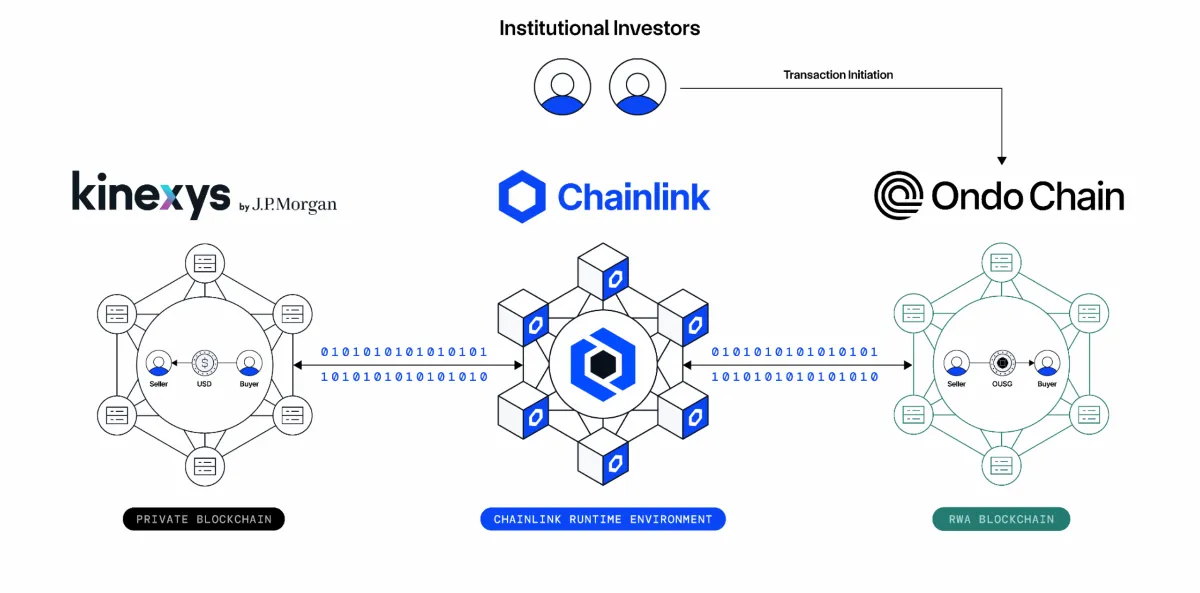
JP Morgan and Chainlink Lead the Top 15 On-Chain Finance Infrastructure Firms — Where Institutional Money Flows
 LINK
LINK BTGO
BTGO PYTH
PYTH
Inside SpaceX's IPO: Goldman Sachs Takes Lead-Left, Morgan Stanley Runs Retail Allocation Across 23 Banks
 GS
GS MS
MS SCHW+2
White House Says Strategic Bitcoin Reserve Announcement Is Imminent as Legal Groundwork Clears
 MSTR
MSTR COIN
COIN MARA+1
Wall Street's Defining Moments
See more





Smart Money Briefing
Weekly summaries of Wall Street guru moves and crypto whale activity.