Apple Names John Ternus as Tim Cook's Successor Amid Full Apple Intelligence Rollout
Apple has confirmed John Ternus, its hardware engineering chief, as Tim Cook's successor. The announcement pairs a CEO transition with a full Apple Intelligence rollout across iPhone, Mac, Apple TV, and Vision Pro.
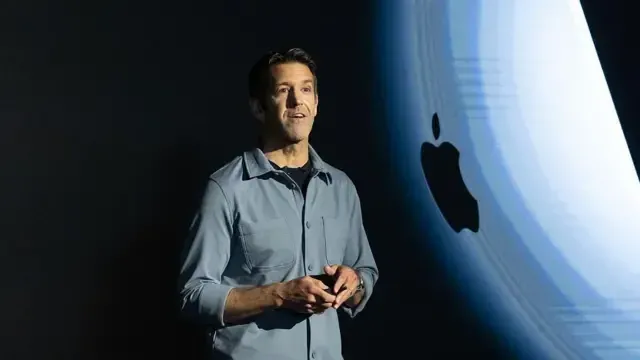
- Tim Cook has named hardware chief John Ternus as Apple's next CEO, with the transition expected in 2026
- Apple simultaneously announced a full Apple Intelligence rollout across all major device categories, marking its shift to an AI platform company
Apple is formalizing the handover from Tim Cook to John Ternus as CEO while rolling out a sweeping overhaul of Apple Intelligence and Siri. Record quarterly earnings give the incoming CEO a strong foundation, but App Store antitrust pressure remains the key risk.
Tim Cook has confirmed John Ternus, Apple's hardware engineering chief, as his successor, with the transition expected later in 2026. The announcement arrived alongside Apple's record quarterly results and a detailed roadmap for embedding Apple Intelligence across every major product line, from iPhone and Mac to Apple TV and Vision Pro. For investors, this is not just a CEO swap — it's a declaration that Apple is evolving into an AI platform company.
Who Is John Ternus?
Ternus has led Apple's hardware engineering through some of its most consequential years, overseeing the M-series Apple Silicon chips and the tight software-silicon-device integration that defines Apple's competitive moat. Just as Tim Cook's supply chain expertise shaped his CEO era, Ternus brings a deep engineering background at the intersection of silicon and device design.
The CEO transition signals Apple is doubling down on tighter integration between its services and AI stack and its hardware platform.
Simply Wall St
Apple has also restructured its hardware organization to align with an AI-led product cycle ahead of Ternus taking the helm.
Apple Intelligence: Going Platform-Wide
The scope of Apple's latest Apple Intelligence announcement stands out. AI is no longer limited to iPhone and iPad — it now runs at the system level across Mac, Apple TV, and Vision Pro. Siri is being overhauled from a simple command interface into a context-aware, multi-app automation layer capable of natural language task execution.
- iPhone and iPad — expanded accessibility features powered by Apple Intelligence
- Mac — deeper Siri integration, AI writing and image generation tools
- Apple TV — AI-driven content discovery and search
- Vision Pro — LLM-based interface woven into spatial computing
Apple's approach combines on-device M4-class AI chips with Private Cloud Compute infrastructure, preserving user privacy while delivering powerful inference. This architecture differentiates Apple from cloud-centric AI models at Google and Meta.
Record Results: A Strong Inheritance
Ternus inherits Apple at a moment of peak financial performance. The services segment (App Store, Apple Music, Apple TV+, iCloud, AppleCare) delivers high margins that buffer hardware revenue variability. Wall Street projects 8.1% annual revenue growth to $550.2 billion by 2029, with net income reaching $150 billion — a roughly 27% increase from the current $117.8 billion.
Key Risk: App Store Antitrust Pressure
The biggest structural headwind is regulatory. Antitrust proceedings are active in the U.S., EU, and UK simultaneously. The EU's Digital Markets Act has already forced App Store fee reductions in Europe. For investors, this is less a one-time event and more a persistent ceiling on services revenue growth — the segment that carries the highest margins and the most optimistic long-run assumptions.
Valuation: Priced for the AI Cycle
Simply Wall St's narrative-based model pegs Apple's fair value at $297.88 per share, close to where the stock currently trades. The current price already reflects considerable optimism about Apple Intelligence driving an iPhone upgrade cycle and services expansion. The upside case requires AI-led demand to materialize at scale; the downside case is regulatory margin compression and AI features failing to meet elevated expectations.
 AAPL
AAPLFrequently Asked Questions
Who is replacing Tim Cook as Apple CEO?
John Ternus, currently Apple's Senior Vice President of Hardware Engineering. He oversaw the development of all major Apple hardware and led the Apple Silicon (M-series chip) program. The handover is expected before the end of 2026.
How is Apple Intelligence different from other AI platforms?
Apple processes AI tasks on-device or through its Private Cloud Compute infrastructure, keeping personal data off external servers. The system is integrated at the OS level across iPhone, Mac, Vision Pro, and Apple TV — a fundamentally different architecture from Google or Meta's cloud-centric AI.
How serious is Apple's App Store antitrust risk?
Lawsuits or regulatory proceedings are active in the U.S., EU, and UK simultaneously. The EU's Digital Markets Act has already forced fee reductions in Europe. This is the biggest structural ceiling on Apple's services revenue growth, and the most important risk factor for long-term investors.
What are Apple's 2029 financial targets?
Wall Street consensus projects $550.2 billion in revenue and $150 billion in net income by 2029, implying 8.1% annual revenue growth from today and roughly 27% earnings growth from the current $117.8 billion.
Is Apple stock a buy at current prices?
The Simply Wall St fair value estimate of $297.88 is close to where Apple trades today, meaning the stock isn't deeply discounted. Upside hinges on whether Apple Intelligence drives a strong iPhone upgrade cycle. The downside scenario is regulatory action compressing services margins and AI features disappointing vs. high expectations.

Sunday's SEC 8-K Earnings Filings Quiet, but Royal Gold Doubles Net Income and Launches Buyback
 RGLD
RGLDVeritone Earnings Shock Sends Shares Down 23%...York Space Systems Among 25 US Companies Filing SEC 8-K Earnings Reports
 YSS
YSS CODX
CODX IPWR+26
Applied Materials Posts Record Q3 Revenue of $9.1 Billion, All-Time High EPS
 AMAT
AMATWall Street's Defining Moments
See more
Sunday's SEC 8-K Earnings Filings Quiet, but Royal Gold Doubles Net Income and Launches Buyback
RGLDVeritone Earnings Shock Sends Shares Down 23%...York Space Systems Among 25 US Companies Filing SEC 8-K Earnings Reports
YSSCODXIPWR+26Applied Materials Posts Record Q3 Revenue of $9.1 Billion, All-Time High EPS
AMATSmart Money Briefing
Weekly summaries of Wall Street guru moves and crypto whale activity.