Musk Is Building a Semiconductor Plant in the Texas Desert — Terafab, a $119B Program
SpaceX filed for up to a $119B Terafab program in Grimes County, Texas. Intel joined as the first external 14A customer, and Wedbush picks ASML, KLA, and Applied Materials as the equipment beneficiaries.
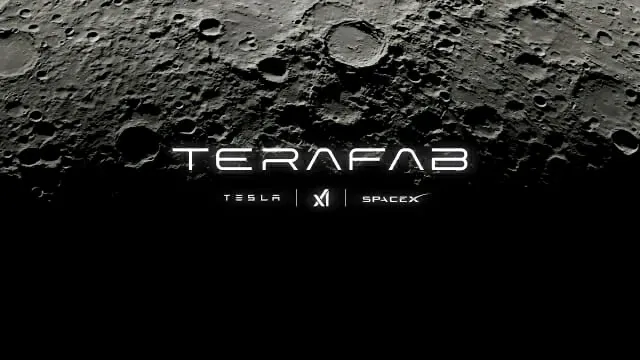
- SpaceX has filed for a Texas chip plant with a $55B Phase 1 and up to $119B total — the Terafab program
- Intel joined as the first external customer for its 14A node and the stock more than doubled in April
- Wedbush picks ASML, KLA, and Applied Materials as the equipment beneficiaries while warning that "there is a meaningful gap between a filing and a fab actually running."
SpaceX files for $55B · Intel's 14A node lands its first external customer · Wedbush: "the opportunity is real, but there is a gap between a filing and a fab."
Elon Musk's joint Tesla / SpaceX / Intel semiconductor plant — "Terafab" — is starting to acquire concrete numbers. On May 6 SpaceX filed a property-tax abatement application in Grimes County, Texas, revealing a Phase 1 commitment of $55B and a total program of up to $119B. That is far larger than what Musk first disclosed in March. Wedbush issued a note on May 8 spelling out both the opportunity and the risk in the deal.
What Terafab is, exactly
Terafab is a vertically integrated semiconductor plant designed to produce the chips Tesla needs for autonomous driving, humanoid robotics, and AI data centers, and the chips SpaceX needs for space-based compute infrastructure. The goal is to put design, manufacturing, memory, packaging, and test under one roof. The long-term target is one million wafer starts per month — roughly 100 to 200 billion AI and memory chips per year.
Intel joined the project on April 7 with the 14A node. It is the first major case of Intel Foundry deploying its most advanced node for an outside customer rather than internal product. Intel's stock more than doubled in April alone — a record monthly performance — and the Terafab news was the central catalyst.
Tesla is building a small prototype line at Giga Texas in Austin, with low-volume production targeted in 2026 and ramp in 2027. The first chip on that line is Tesla's 5th-generation AI chip, "AI5." SpaceX is the lead on the large Grimes County facility, sited near Gibbons Creek Reservoir, about 32 km east of Bryan-College Station.
Wedbush's picks — ASML, KLA, Applied Materials
Wedbush's direct beneficiaries from Terafab are not Intel itself but the semiconductor equipment names. ASML, KLA, and Applied Materials are flagged as the biggest winners if the program builds out fully. A new fab on Terafab's scale brings tens of billions of dollars in tool orders. For Intel, Terafab is more than a customer win — it is a strategic identity shift toward becoming a core partner of the AI / robotics manufacturing ecosystem. Wedbush views this, if executed, as grounds to fundamentally rerate Intel.
SpaceX merged with xAI earlier this year, forming a combined entity valued at roughly $1.75T. A SpaceX IPO is also under discussion for June.
Wedbush's warning — "there is a gap between a filing and a fab"
Wedbush's message is not pure bull. The note explicitly states a $55B application is not the same thing as a running fab. A program of this size requires enormous capital, sophisticated execution, and supply-chain coordination, all at the same time. There is no precedent in US semiconductor history for Tesla, SpaceX, and Intel collaborating at this depth.
Wedbush also flags that Intel's role is not explicitly identified in the Grimes County filing. The Austin prototype targets low-volume production, and the full-scale build is still resting on assumptions. The history of fab announcements is full of cases that overshot original timelines and budgets. The opportunity is real, but investors should confirm execution before pricing in the full upside — that is the core of Wedbush's warning.
Frequently Asked Questions
Is Terafab competing with TSMC and Samsung Foundry?
Not directly — it is closer to internalizing demand. The strategy is for Tesla / SpaceX / xAI to manufacture the chips they need rather than outsource them. If scale grows, an extension to external customers is plausible.
Is Intel's 14A competitive with TSMC's 2nm?
Intel 14A is in the same generation as TSMC 2nm. If Terafab successfully proves out 14A in volume, that becomes a decisive reference for Intel Foundry credibility — until now, 14A had no large-scale external customer validation.
How do equipment makers benefit?
A new fab requires EUV scanners (ASML), metrology (KLA), and deposition / etch tools (Applied Materials) at scale. A $55B–$119B fab translates into tens of billions of dollars of tool orders flowing to these names.
How long until Terafab is up and running?
The Austin prototype targets low-volume in 2026 and ramp in 2027. The Grimes County complex is likely to take several years to complete in full. Fab projects typically run 3–5 years or more from announcement to volume production.

Sunday's SEC 8-K Earnings Filings Quiet, but Royal Gold Doubles Net Income and Launches Buyback
 RGLD
RGLDVeritone Earnings Shock Sends Shares Down 23%...York Space Systems Among 25 US Companies Filing SEC 8-K Earnings Reports
 YSS
YSS CODX
CODX IPWR+26
Applied Materials Posts Record Q3 Revenue of $9.1 Billion, All-Time High EPS
 AMAT
AMATWall Street's Defining Moments
See more
Sunday's SEC 8-K Earnings Filings Quiet, but Royal Gold Doubles Net Income and Launches Buyback
RGLDVeritone Earnings Shock Sends Shares Down 23%...York Space Systems Among 25 US Companies Filing SEC 8-K Earnings Reports
YSSCODXIPWR+26Applied Materials Posts Record Q3 Revenue of $9.1 Billion, All-Time High EPS
AMATSmart Money Briefing
Weekly summaries of Wall Street guru moves and crypto whale activity.