Rocket Lab Eyes 'Space Foundry' Status — All Eyes on May Earnings
Mynaric acquisition closed, SDA contracts top $1.3B, Neutron engine enters rigorous testing — three major catalysts ignite simultaneously
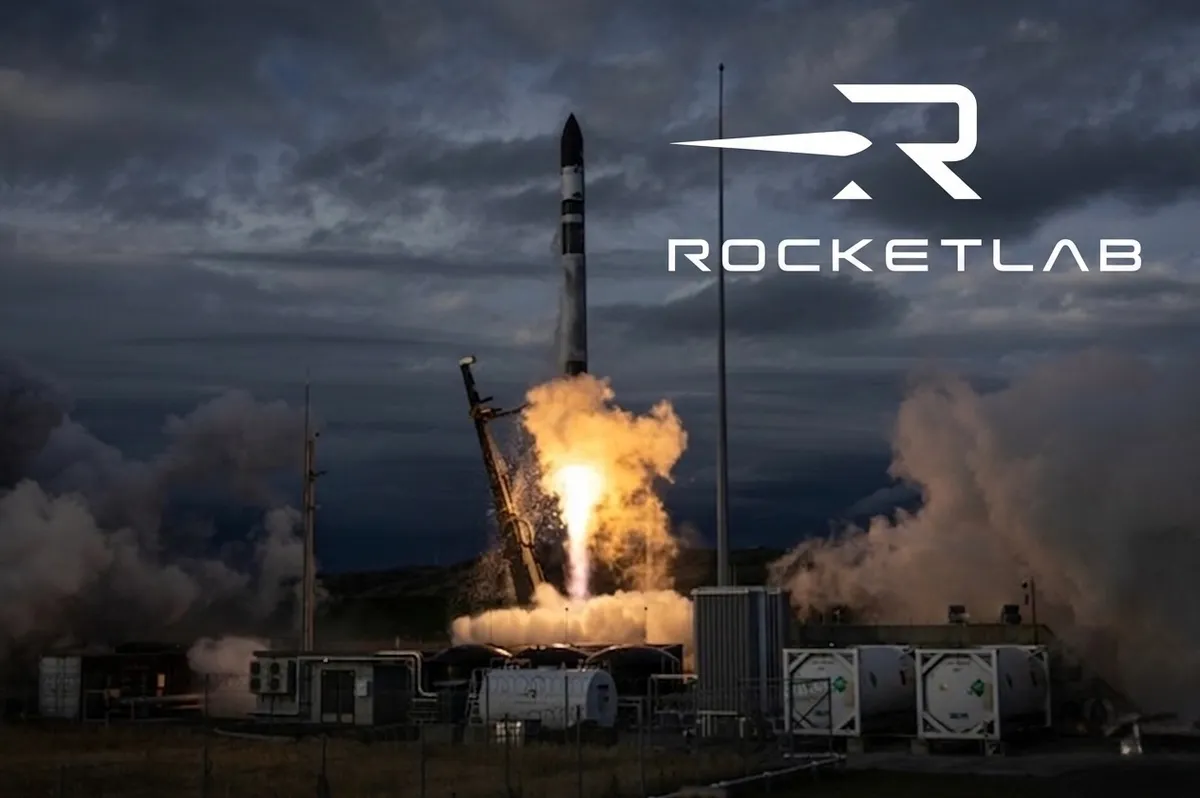
Rocket Lab USA (RKLB) is rapidly evolving from a small-lift launch provider into a full-stack space infrastructure company. With its Q1 2026 earnings call scheduled for May 7, Wall Street is simultaneously tracking the company's revenue growth rate, satellite manufacturing backlog, and Neutron rocket development timeline. The 'pure-play launch company' label no longer applies. Rocket Lab's vision is a 'Space Foundry' model — integrating design → manufacturing → launch → operations under one roof.
57% Annual Growth Projected — Wall Street Consensus: Strong Buy
Rocket Lab has issued FY2026 revenue guidance of $185M–$200M, representing approximately 57% year-over-year growth. The Wall Street analyst consensus stands at Strong Buy, with an average price target implying substantial upside from current levels.
Two core growth drivers underpin this outlook. First, increasing launch cadence for the Electron vehicle — the company already set an annual launch record in 2025 and is targeting a pace of more than one launch per month in 2026. Second, large contract wins in the Space Systems (satellite manufacturing) segment are fundamentally reshaping the company's revenue mix.
Satellite Manufacturing Now Accounts for 67% of Revenue
Rocket Lab's revenue mix has undergone a structural shift. While Electron launch services were once the primary revenue driver, the Space Systems segment — covering satellite design, manufacturing, and components — now represents 67% of total revenue. Space Systems generated approximately $602M in annual revenue for FY2025.
The order backlog is even more compelling, standing at $1.85B, with a significant portion tied to defense satellite contracts from the U.S. Space Development Agency (SDA). Cumulative SDA contract value has surpassed $1.3B. This program — aimed at building a low-Earth orbit missile tracking and surveillance satellite constellation — is structured to generate recurring revenue over multiple years.
Rocket Lab has already delivered satellites under SDA Tranche 1 and Tranche 2, and holds a competitive advantage in bidding for Tranche 3 and beyond. The company has firmly established itself not merely as a launch provider, but as an "on-orbit manufacturer."
Mynaric Acquisition Closes April 14 — The Final Piece of Vertical Integration
On April 14, 2026, Rocket Lab officially completed its acquisition of German laser optical communications company Mynaric for approximately $155.3M. Mynaric is a leading provider of Optical Inter-Satellite Link (OISL) terminals and has been supplying critical communications hardware for SDA programs.
The strategic rationale is clear-cut. Rocket Lab has now internalized the full stack: satellite buses → solar panels → reaction wheels → star trackers → launch vehicles → inter-satellite optical communication terminals. Among non-SpaceX commercial space companies, Rocket Lab is effectively the only player to have achieved this level of vertical integration.
The Mynaric acquisition goes beyond component internalization — it is also a calculated move to maximize competitiveness in future SDA contract bids. When a single vendor can deliver both the satellite bus and its communications payload as an integrated solution, it reduces programmatic complexity and schedule risk for the customer. From a Department of Defense procurement standpoint, Rocket Lab's offering is highly compelling.
Neutron Engine Undergoing Grueling '7 Days a Week, 20 Hours a Day' Hot-Fire Campaign
Rocket Lab's most significant near-term catalyst remains its medium-lift vehicle, Neutron. The rocket's Archimedes engine is currently undergoing an intensive hot-fire test campaign at the company's Wallops Island facility in Virginia, running 7 days a week, up to 20 hours a day.
CEO Peter Beck has been confirmed to have filed a Special Temporary Authorization (STA) with the FCC — a signal that flight test preparations are entering a concrete phase. The company continues to target Q4 2026 for Neutron's inaugural flight.
A successful Neutron orbital demonstration would make Rocket Lab the second U.S. company — after SpaceX's Falcon 9 — to operate a reusable medium-lift launch vehicle. This would not only sharpen its pricing competitiveness in the launch services market, but also give the company the ability to self-launch its own satellite constellations.
May 7 Earnings: Three Things to Watch
Investors should focus on three key items during the Q1 2026 earnings call on May 7.
First, Archimedes engine qualification timeline. For Neutron's inaugural flight target (Q4 2026) to hold, engine qualification must be completed within Q2. Any commentary from Peter Beck on hot-fire test progress and the qualification schedule will be the most closely watched element of the call.
Second, post-Mynaric pipeline visibility. As the first earnings report following the acquisition close, management's commentary on Mynaric's existing backlog, revenue synergies with Rocket Lab's current contracts, and newly secured pipeline deals post-integration could be a key share price driver.
Third, SDA backlog-to-revenue conversion rate. How quickly the $1.85B backlog is being recognized as quarterly revenue is critical. In particular, the delivery schedule for SDA Tranche 2 satellites and the progression of Tranche 3 contract activity could serve as the trigger for a guidance raise.
This article is intended for informational purposes only and does not constitute a recommendation to buy or sell any security. Investment decisions should be made based on your own judgment and at your own risk. Figures and projections cited herein are based on publicly available information and analyst estimates and may differ from actual results.
Frequently Asked Questions
로켓랩이 "우주 파운드리"로 불리는 이유는?
발사체에서 위성 본체·태양전지 패널·반응휠·스타 트래커, 그리고 마이나릭 인수로 위성 간 레이저 광통신 터미널까지 모두 내재화했습니다. 비-스페이스X 기업 중 이 정도 수직 계열화를 달성한 곳은 사실상 로켓랩이 유일하며, SDA 발주처에 통합 납품 시 일정 리스크 절감 효과가 큽니다.
5월 7일 실적에서 가장 주목할 포인트는?
(1) 아르키메데스 엔진 인증 일정 — Q4 첫 비행 위해 Q2 인증 필수, (2) 마이나릭 통합 후 새 파이프라인과 시너지, (3) SDA 매출 전환율 — 18.5억 달러 잔고가 분기 매출로 얼마나 빨리 인식되는지가 가이던스 상향 트리거입니다.
뉴트론 로켓이 성공하면 어떤 의미인가요?
스페이스X 팰컨 9 이후 미국에서 두 번째로 재사용 가능한 중형 발사체를 운용하는 기업이 됩니다. 발사 서비스 시장 가격 경쟁력은 물론 자사 위성 성좌를 자력 발사할 수 있는 역량까지 확보합니다. 현재 아르키메데스 엔진은 주 7일·하루 20시간 가혹 테스트 중입니다.
Space Systems 매출 67% 비중의 의미는?
과거 일렉트론 발사 매출 중심에서 위성 설계·제조·부품 매출로 무게중심이 이동했다는 뜻입니다. 2025년 Space Systems 연간 매출 6.02억 달러, SDA Tranche 1·2 위성 납품 실적 보유, Tranche 3 경쟁 입찰 우위로 "발사만 하는 회사"가 아니라 "궤도 위 제조업체" 포지셔닝이 굳어지고 있습니다.

SpaceX June 12 · Anthropic October · OpenAI Q4 — The Real Weight of 2026's IPO Pipeline
 CBRS
CBRS RKLB
RKLB DXYZ+4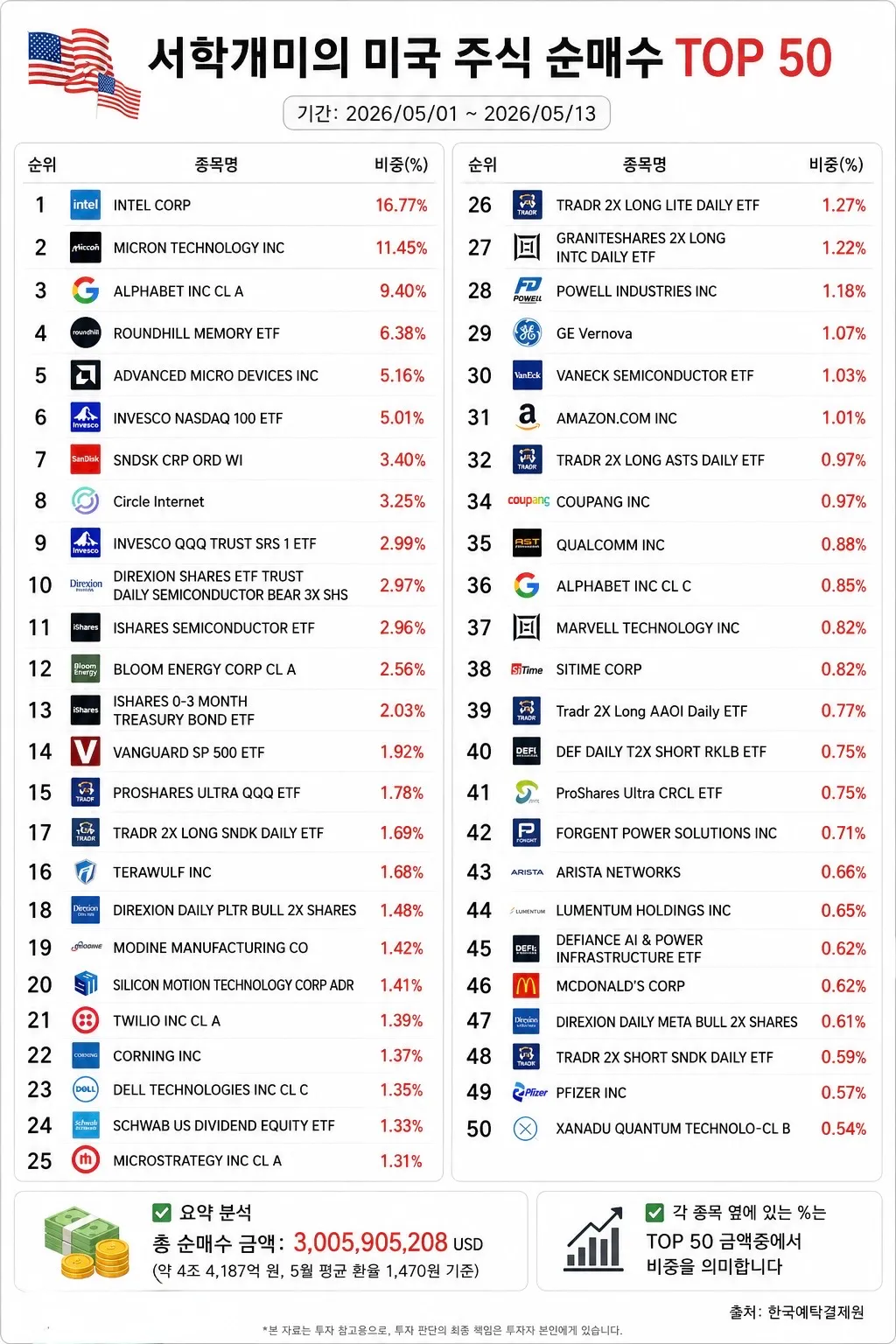
Korean Retail Investors Scooped Up Intel, Micron, and Alphabet Over Two Weeks in May — TOP 50 Net-Buy Analysis
 INTC
INTC MU
MU GOOGL+12
Up 42% in Two Days, 70% YTD — Why Rocket Lab Became the SpaceX IPO Proxy
RKLB RTX
RTXWall Street's Defining Moments
See more


Sunday's SEC 8-K Earnings Filings Quiet, but Royal Gold Doubles Net Income and Launches Buyback
 RGLD
RGLDVeritone Earnings Shock Sends Shares Down 23%...York Space Systems Among 25 US Companies Filing SEC 8-K Earnings Reports
 YSS
YSS CODX
CODX IPWR+26
Applied Materials Posts Record Q3 Revenue of $9.1 Billion, All-Time High EPS
 AMAT
AMATSmart Money Briefing
Weekly summaries of Wall Street guru moves and crypto whale activity.